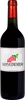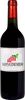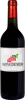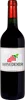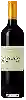
Vignobles Dupeyrat & FilsChâteau Côtes de Saint Clair Puisseguin Saint-Émilion
 Red wine



This wine is a blend of 5 varietals which are the Cabernet franc, the Cabernet-Sauvignon, the Malbec, the Petit Verdot and the Merlot.
In the mouth this red wine is a powerful with a nice balance between acidity and tannins.
This wine generally goes well with poultry, beef or game (deer, venison).
The Château Côtes de Saint Clair Puisseguin Saint-Émilion of the Vignobles Dupeyrat & Fils is in the top 10 of wines of Puisseguin-Saint-Émilion.
Taste structure of the Château Côtes de Saint Clair Puisseguin Saint-Émilion from the Vignobles Dupeyrat & Fils
Light | Bold | |
Smooth | Tannic | |
Dry | Sweet | |
Soft | Acidic |
In the mouth the Château Côtes de Saint Clair Puisseguin Saint-Émilion of Vignobles Dupeyrat & Fils in the region of Bordeaux is a powerful with a nice balance between acidity and tannins.


Food and wine pairings with Château Côtes de Saint Clair Puisseguin Saint-Émilion
Pairings that work perfectly with Château Côtes de Saint Clair Puisseguin Saint-Émilion



Original food and wine pairings with Château Côtes de Saint Clair Puisseguin Saint-Émilion

The Château Côtes de Saint Clair Puisseguin Saint-Émilion of Vignobles Dupeyrat & Fils matches generally quite well with dishes of beef, lamb or game (deer, venison) such as recipes of daube niçoise, lamb curl or potjevleesch.
Details and technical informations about Vignobles Dupeyrat & Fils's Château Côtes de Saint Clair Puisseguin Saint-Émilion.
Discover the grape variety: Cabernet franc
Cabernet Franc is one of the oldest red grape varieties in Bordeaux. The Libourne region is its terroir where it develops best. The terroirs of Saint-Emilion and Fronsac allow it to mature and develop its best range of aromas. It is also the majority in many blends. The very famous Château Cheval Blanc, for example, uses 60% Cabernet Franc. The wines produced with Cabernet Franc are medium in colour with fine tannins and subtle aromas of small red fruits and spices. When blended with Merlot and Cabernet Sauvignon, it brings complexity and a bouquet of aromas to the wine. It produces fruity wines that can be drunk quite quickly, but whose great vintages can be kept for a long time. It is an earlier grape variety than Cabernet Sauvignon, which means that it is planted as far north as the Loire Valley. In Anjou, it is also used to make sweet rosé wines. Cabernet Franc is now used in some twenty countries in Europe and throughout the world.
Last vintages of this wine
The best vintages of Château Côtes de Saint Clair Puisseguin Saint-Émilion from Vignobles Dupeyrat & Fils are 2010, 2015, 2014, 2011 and 2009.
Informations about the Vignobles Dupeyrat & Fils
The Vignobles Dupeyrat & Fils is one of of the world's greatest estates. It offers 1 wines for sale in the of Puisseguin-Saint-Émilion to come and discover on site or to buy online.

The wine region of Puisseguin-Saint-Émilion
The wine region of Puisseguin-Saint-Émilion is located in the region of Saint-Émilion of Bordeaux of France. Wineries and vineyards like the Domaine Les Hauts Du Bourdonnais or the Domaine La Mauriane produce mainly wines red and white. The most planted grape varieties in the region of Puisseguin-Saint-Émilion are Merlot, Cabernet-Sauvignon and Cabernet franc, they are then used in wines in blends or as a single variety. On the nose of Puisseguin-Saint-Émilion often reveals types of flavors of oaky, anise or mint and sometimes also flavors of cinnamon, black olive or violet.
The wine region of Bordeaux
Bordeaux, in southwestern France, is one of the most famous, prestigious and prolific wine regions in the world. The majority of Bordeaux wines (nearly 90% of the production Volume) are the Dry, medium and Full-bodied red Bordeaux blends for which it is famous. The finest (and most expensive) are the wines of the great châteaux of Haut-Médoc and the right bank appellations of Saint-Émilion and Pomerol. The former focuses (at the highest level) on Cabernet Sauvignon, the latter on Merlot.
The word of the wine: Effervescent
Any wine loaded with CO2 (carbon dioxide), which is revealed in the form of bubbles, reinforcing the freshness effect in the mouth. This gas production is the result of what is called the second fermentation in the bottle. It occurs in champagnes and sparkling wines such as crémants.