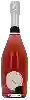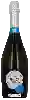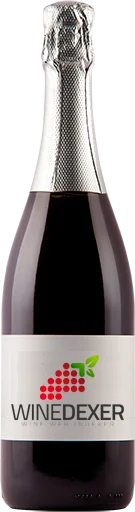
Winery CostarossPiu Blanco
 Sparkling wine
In the mouth this sparkling wine is a with a nice vivacity and a fine and pleasant bubble.
This wine generally goes well with vegetarian, appetizers and snacks or shellfish.
Taste structure of the Piu Blanco from the Winery Costaross
Light | Bold | |
Soft | Acidic | |
Gentle | Fizzy |
In the mouth the Piu Blanco of Winery Costaross in the region of Veneto is a with a nice vivacity and a fine and pleasant bubble.
Food and wine pairings with Piu Blanco
Pairings that work perfectly with Piu Blanco



Original food and wine pairings with Piu Blanco


The Piu Blanco of Winery Costaross matches generally quite well with dishes of shellfish, vegetarian or appetizers and snacks such as recipes of blanquette of monkfish and scallops, cream and tuna quiche or pan con tomate.
Details and technical informations about Winery Costaross's Piu Blanco.
Discover the grape variety: Etraire de l'Aduï
Would be finding its first origins in the valley of Isere, one would have indeed found it in the Mas de l'Aduï in Saint Ismier. We find a certain resemblance with the Persian. Today its multiplication in nurseries is very weak, registered however with the official Catalogue of the varieties of vine list A1 under the name of Etraire de la Dui.
Informations about the Winery Costaross
The Winery Costaross is one of of the world's greatest estates. It offers 9 wines for sale in the of Veneto to come and discover on site or to buy online.

The wine region of Veneto
Veneto is an important and growing wine region in northeastern Italy. Veneto is administratively Part of the Triveneto area, aLong with its smaller neighbors, Trentino-Alto Adige and Friuli-Venezia Giulia. In terms of geography, culture and wine styles, it represents a transition from the Alpine and Germanic-Slavic end of Italy to the warmer, drier, more Roman lands to the South. Veneto is slightly smaller than the other major Italian wine regions - Piedmont, Tuscany, Lombardy, Puglia and Sicily - but it produces more wine than any of them.
The word of the wine: Rosé de saignée
A method of making rosé wine that consists of partially draining a vat of red wine after a few hours of maceration. The longer the maceration, the stronger the colour. This practice gives rich and expressive rosés.