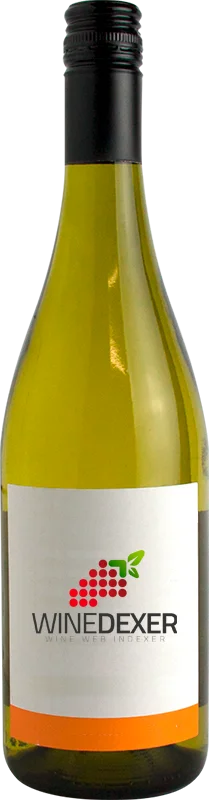
Winery Convento ViejoValle del Maule Sauvignon Blanc
 White wine


In the mouth this white wine is a with a nice freshness.
This wine generally goes well with vegetarian, shellfish or goat cheese.
Taste structure of the Valle del Maule Sauvignon Blanc from the Winery Convento Viejo
Light | Bold | |
Dry | Sweet | |
Soft | Acidic |
In the mouth the Valle del Maule Sauvignon Blanc of Winery Convento Viejo in the region of Central Valley is a with a nice freshness.
Food and wine pairings with Valle del Maule Sauvignon Blanc
Pairings that work perfectly with Valle del Maule Sauvignon Blanc


Original food and wine pairings with Valle del Maule Sauvignon Blanc
The Valle del Maule Sauvignon Blanc of Winery Convento Viejo matches generally quite well with dishes of shellfish, vegetarian or goat cheese such as recipes of spanish paella, spinach and goat cheese quiche or 4 seasons pizza my way.
Details and technical informations about Winery Convento Viejo's Valle del Maule Sauvignon Blanc.
Discover the grape variety: Suffolk red
Interspecific crossing between the fredonia or early concord and the black monukka - the latter also being called russian seedless or black kischmish - obtained in 1935 by John Einset (1915/1981) at the Agricultural Experimental Station of the State of New-York (United States) ... practically unknown in France except for amateur gardeners, registered however in the Official Catalogue of the varieties of grapevine of table A2 list. Note that it has concord and isabelle as parents.
Last vintages of this wine

The best vintages of Valle del Maule Sauvignon Blanc from Winery Convento Viejo are 2019, 2014, 2017, 2012 and 0.
Informations about the Winery Convento Viejo
The Winery Convento Viejo is one of of the world's greatest estates. It offers 16 wines for sale in the of Maule Valley to come and discover on site or to buy online.

The wine region of Maule Valley
Maule Valley is the largest wine-producing region in Chile other than the Central Valley, of which it is a Part. It has 75,000 acres (30,000ha) under Vine, and has traditionally been associated with quantity rather than quality. But this is rapidly changing – the bulk-producing Pais vine is gradually being replaced with more international varieties such as Cabernet Sauvignon and Carmenère, and careful winemaking practices are being employed to make some world-class red wines from old-vine Carignan. The Central Valley itself runs between the Andes and the Coastal Mountains from the Chilean capital of Santiago in the North to the up-and-coming region of Bío Bío in the South.
The wine region of Central Valley
The Central Valley (El Valle Central) of Chile is one of the most important wine-producing areas in South America in terms of Volume. It is also one of the largest wine regions, stretching from the Maipo Valley (just south of Santiago) to the southern end of the Maule Valley. This is a distance of almost 250 miles (400km) and covers a number of Climate types. The Central Valley wine region is easily (and often) confused with the geological Central Valley, which runs north–south for more than 620 miles (1000km) between the Pacific Coastal Ranges and the lower Andes.
The word of the wine: Alcoholic fermentation
Transformation of sugars into alcohol under the effect of yeast. These yeasts exist in their natural state in the vineyards and in the cellars. Artificial seeding with selected yeasts is however very often practiced.