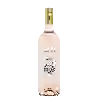
Château Petit SonnaillerCuvée Prestige Rosé
 Pink wine
In the mouth this pink wine is a with a nice freshness.
This wine generally goes well with pork, vegetarian or poultry.
Taste structure of the Cuvée Prestige Rosé from the Château Petit Sonnailler
Light | Bold | |
Dry | Sweet | |
Soft | Acidic |
In the mouth the Cuvée Prestige Rosé of Château Petit Sonnailler in the region of Provence is a with a nice freshness.
Food and wine pairings with Cuvée Prestige Rosé
Pairings that work perfectly with Cuvée Prestige Rosé



Original food and wine pairings with Cuvée Prestige Rosé

The Cuvée Prestige Rosé of Château Petit Sonnailler matches generally quite well with dishes of pork, shellfish or vegetarian such as recipes of brussels sprouts with bacon in a casserole, tagliatelle with shrimps or goat cheese and bacon quiche.
Details and technical informations about Château Petit Sonnailler's Cuvée Prestige Rosé.
Discover the grape variety: Reichensteiner
Intraspecific crossing between the müller-thurgau and a variety resulting from the crossing (madeleine angevine x calabre blanc) obtained in Germany in 1939 by Heinrich Birk (1898-1973). It can be found in France (Alsace, etc.), Great Britain, the Netherlands, Germany, Belgium, Switzerland, New Zealand, etc.
Informations about the Château Petit Sonnailler
The Château Petit Sonnailler is one of of the world's greatest estates. It offers 13 wines for sale in the of Coteaux d'Aix-en-Provence to come and discover on site or to buy online.

The wine region of Coteaux d'Aix-en-Provence
Côteaux d'Aix-en-Provence is one of the main French appellations in the Provence wine region, located in the extreme southeast of the country. It is the second largest appellation in the region, with about 4,000 hectares North and west of Aix-en-Provence - the town from which it takes its name. The area also bears the tiny title of AOCPalette. The Côteaux d'Aix-en-Provence appellation was first introduced as a VDQS in 1956, having been informally known as Côteaux du Roy René (René d'Anjou being a 15th century French king famous for his love of wine and the Vine).
The wine region of Provence
Provence is a wine region in the far southeast of France, best known for the quality (and quantity) of its rosé wines and for its Warm, mild Climate. The modernization that is taking place in many of the traditional wine regions of southern France has not yet taken place to the same extent in Provence, but there are Clear signs of change. The region's Grape varieties, in particular, have come under scrutiny in recent decades. Traditional varieties such as Carignan, Barbaroux (Barbarossa from Sardinia) and Calitor are being replaced by more commercially viable varieties such as Grenache, Syrah and even Cabernet Sauvignon.
The word of the wine: Rosé (champagne)
Unique rosé wine made by blending white wine with a small amount of red Champagne. It is however possible to vinify the must directly into rosé.