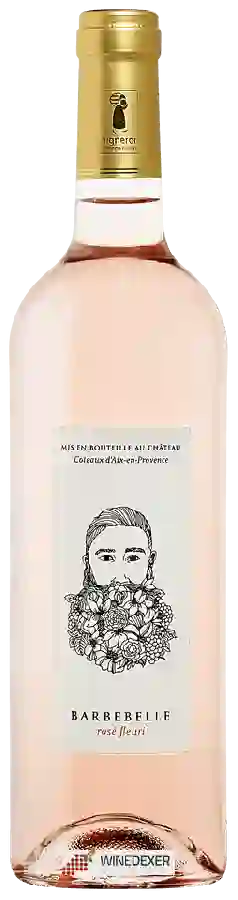
Château BarbebelleRosé Fleuri
 Pink wine


In the mouth this pink wine is a with a nice freshness.
This wine generally goes well with pork, vegetarian or poultry.
The Rosé Fleuri of the Château Barbebelle is in the top 5 of wines of Coteaux d'Aix-en-Provence.

Taste structure of the Rosé Fleuri from the Château Barbebelle
Light | Bold | |
Dry | Sweet | |
Soft | Acidic |
In the mouth the Rosé Fleuri of Château Barbebelle in the region of Provence is a with a nice freshness.
Wine flavors and olphactive analysis





On the nose the Rosé Fleuri of Château Barbebelle in the region of Provence often reveals types of flavors of grapefruit, citrus or green apple and sometimes also flavors of minerality, red fruit or strawberries.
Food and wine pairings with Rosé Fleuri
Pairings that work perfectly with Rosé Fleuri



Original food and wine pairings with Rosé Fleuri

The Rosé Fleuri of Château Barbebelle matches generally quite well with dishes of pork, shellfish or vegetarian such as recipes of filet mignon in a crust, linguine with shrimp and spicy tomato sauce or zucchini and goat cheese quiche.
Details and technical informations about Château Barbebelle's Rosé Fleuri.
Discover the grape variety: Aledo
Table grape with long bunches and juicy, crunchy golden berries, firm flesh and a neutral sweet flavour, prized for its exceptional shelf life. Late ripening. Grown mainly for end-of-year consumption (Christmas grape) in the Vinalopó (Alicante), it benefits from the IGP Uva de Mesa Embolsada del Vinalopó. Spanish white table grape variety, native to the Valencia and Alicante region.
Last vintages of this wine

The best vintages of Rosé Fleuri from Château Barbebelle are 2019, 2018, 2017, 2016
Informations about the Château Barbebelle
The Château Barbebelle is one of of the world's greatest estates. It offers 13 wines for sale in the of Coteaux d'Aix-en-Provence to come and discover on site or to buy online.

The wine region of Coteaux d'Aix-en-Provence
Provençal AOC between the Durance, Rhône, Mediterranean and Sainte-Victoire, 70% rosés. Fresh, fruity rosés with signature notes of strawberry, grapefruit, white peach, flowers and a garrigue touch, taut and thirst-quenching palate — the sunny Provençal aperitif. Supple reds blending Grenache, Syrah, Cinsault, Mourvèdre and Cabernet Sauvignon (spice, density, structure). Whites Rolle (Vermentino) and Clairette, ample with white flowers.
The wine region of Provence
World capital of dry, refined rosé (~90% of production). Pale rose-petal colour, delicate nose of fresh red fruits (strawberry, raspberry, redcurrant), citrus (pink grapefruit), white flowers and a mineral touch, taut and thirst-quenching palate — the Mediterranean aperitif par excellence. Blends of Grenache, Cinsault, Syrah, Tibouren and Mourvèdre. Fleshy Bandol reds from Mourvèdre (leather, garrigue, age-worthy), straight Cassis whites.
The word of the wine: Apogee
This period varies greatly depending on the type of wine and the vintage, and corresponds to the optimum quality of a wine. After the peak comes the decline.


