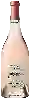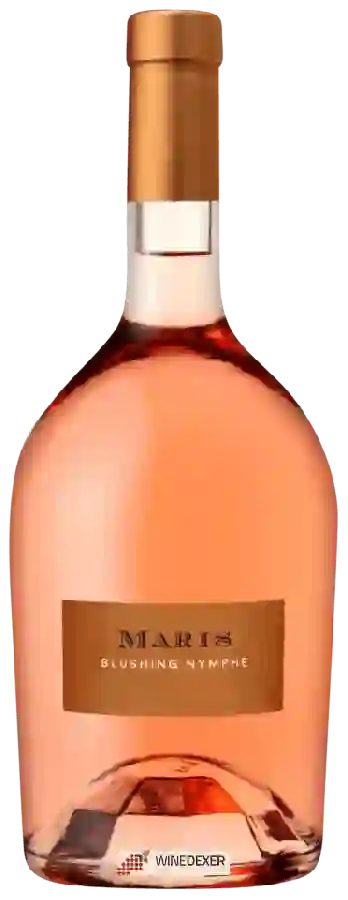
Château MarisBlushing Nymphe
 Pink wine
In the mouth this pink wine is a with a nice freshness.
This wine generally goes well with vegetarian, appetizers and snacks or lean fish.
The Blushing Nymphe of the Château Maris is in the top 70 of wines of Languedoc.

Taste structure of the Blushing Nymphe from the Château Maris
Light | Bold | |
Dry | Sweet | |
Soft | Acidic |
In the mouth the Blushing Nymphe of Château Maris in the region of Languedoc-Roussillon is a with a nice freshness.
Food and wine pairings with Blushing Nymphe
Pairings that work perfectly with Blushing Nymphe



Original food and wine pairings with Blushing Nymphe


The Blushing Nymphe of Château Maris matches generally quite well with dishes of pasta, vegetarian or appetizers and snacks such as recipes of very simple spaghetti carbonara, vegan leek and tofu quiche or fried onions.
Details and technical informations about Château Maris's Blushing Nymphe.
Discover the grape variety: Servant
Table grape with elongated golden berries, thick skin and crunchy flesh; neutral and fresh taste with understated notes of white-fleshed fruits and fresh grape. Late-ripening with excellent winter storage. Grown for fresh consumption in the Mediterranean (Vaucluse, Var), prized for its excellent post-harvest keeping quality and historically served at year-end tables. Native French white table grape from the South-East.
Informations about the Château Maris
The Château Maris is one of of the world's great estates. It offers 61 wines for sale in the of Languedoc to come and discover on site or to buy online.

The wine region of Languedoc
Sunny, generous southern reds: spicy, peppery Syrah, round, candied Grenache (ripe fruit, garrigue), deep Mourvèdre, structured Carignan, supple Cinsault. From robust Corbières and Minervois to fresher Terrasses du Larzac, via Faugères on schist or taut Pic Saint-Loup. Lively, iodised Picpoul de Pinet whites (oysters), ample Roussanne and Marsanne. 14 sub-appellations, ~10,000 ha in regional AOC.
The wine region of Languedoc-Roussillon
Largest single French vineyard, dominated by sunny, generous reds. Spicy Syrah, candied Grenache (ripe fruit, garrigue), structured Carignan, deep Mourvèdre, supple Cinsault. Stars: structured Corbières, Minervois, Faugères, Saint-Chinian; round Côtes-du-Roussillon. Legendary vins doux naturels: Banyuls and Maury (fortified Grenache) with notes of cocoa, fig, prune.
The word of the wine: Shine
Character of a wine that reflects light with brilliance. The brilliance is enhanced when the wine is decanted.