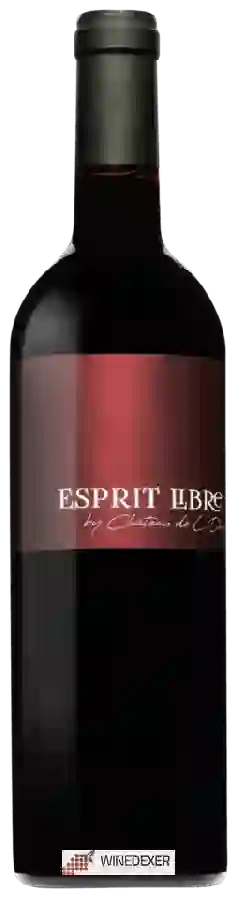
Château de l'OuEsprit Libre
 Red wine



In the mouth this red wine is a powerful with a nice balance between acidity and tannins.
This wine generally goes well with beef, veal or pasta.
Taste structure of the Esprit Libre from the Château de l'Ou
Light | Bold | |
Smooth | Tannic | |
Dry | Sweet | |
Soft | Acidic |
In the mouth the Esprit Libre of Château de l'Ou in the region of Languedoc-Roussillon is a powerful with a nice balance between acidity and tannins.
Food and wine pairings with Esprit Libre
Pairings that work perfectly with Esprit Libre



Original food and wine pairings with Esprit Libre
The Esprit Libre of Château de l'Ou matches generally quite well with dishes of beef, pasta or veal such as recipes of adapted vietnamese fondue, simple chinese noodle soup or flights in the wind à la provençale.
Details and technical informations about Château de l'Ou's Esprit Libre.
Discover the grape variety: Négret pounjut
An ancient grape variety endemic to the Fronton region in the Haute Garonne that could also be found in La Ville Dieu du Temple in the Lot et Garonne. Today, it is not very present in the vineyard and is on the verge of extinction. It is, however, registered in the Official Catalogue of wine grape varieties, list A. It should not be confused with Négret de Banhars, Négret Castrais or Négret de la Canourgue, and it should be noted that it is related to Prunelard. Négret pounjut is completely unknown in other wine-producing countries.
Informations about the Château de l'Ou
The Château de l'Ou is one of of the world's great estates. It offers 25 wines for sale in the of Languedoc-Roussillon to come and discover on site or to buy online.

The wine region of Languedoc-Roussillon
Languedoc (formerly Coteaux du Languedoc) is a key appellation used in the Languedoc-Roussillon wine region of southern France. It covers Dry table wines of all three colors (red, white and rosé) from the entire region, but leaves Sweet and Sparkling wines to other more specialized appellations. About 75% of all Languedoc wines are red, with the remaining 25% split roughly down the middle between whites and rosés. The appellation covers most of the Languedoc region and almost a third of all the vineyards in France.
The word of the wine: PDO
Protected Designation of Origin - equivalent to the term "controlled designation of origin" in European regulations.