The Winery Charles Meyer of Crémant d'Alsace of Alsace
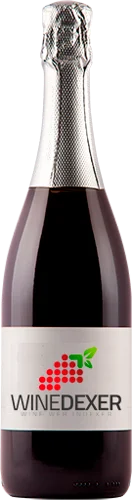
The Winery Charles Meyer is one of the best wineries to follow in Crémant d'Alsace.. It offers 2 wines for sale in of Crémant d'Alsace to come and discover on site or to buy online.
Looking for the best Winery Charles Meyer wines in Crémant d'Alsace among all the wines in the region? Check out our tops of the best red, white or effervescent Winery Charles Meyer wines. Also find some food and wine pairings that may be suitable with the wines from this area. Learn more about the region and the Winery Charles Meyer wines with technical and enological descriptions.
How Winery Charles Meyer wines pair with each other generally quite well with dishes of shellfish, poultry or appetizers and snacks such as recipes of squid from the mouth of the cavado river (portugal), violet omelette or prunes with bacon.
Crémant d'Alsace is the appellation for white and rosé Sparkling wines from the Alsace wine region in northeastern France. Introduced in August 1976, the appellation now accounts for about a quarter of the region's production, or about 45 million bottles per year, up from 31 million in 2009. Outside of Champagne (240km to the west), it is the dominant French sparkling wine appellation, with more than half of all crémant production. The cooperatives are the most important players, with Wolfberger alone producing 6 to 7 million bottles.
But many of the region's most prestigious estates produce sparkling wines. As with all French Crémant appellations, the traditional method is used to make Crémant d'Alsace. The wines must spend a minimum of nine months maturing on their lees to ensure a certain level of complexity. This ageing on the lees gives the wines a toasty, nutty, sometimes flinty Character.
Planning a wine route in the of Crémant d'Alsace? Here are the wineries to visit and the winemakers to meet during your trip in search of wines similar to Winery Charles Meyer.
Interspecific cross between Freiburg 4-61 (23-416 Joannès-Seyve x pinot noir) and Bronner made in 1987 by Norbert Becker of the Freiburg Research Institute in Germany. It has the particularity of having only one gene for resistance to mildew and powdery mildew. It can be found in Germany, but also in Switzerland, Belgium, ... and in France.