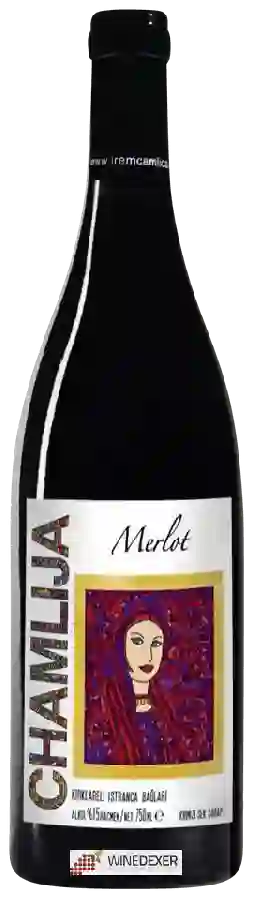
Winery ChamlijaMerlot
 Red wine


This wine generally goes well with beef and game (deer, venison).
The Merlot of the Winery Chamlija is in the top 60 of wines of Thrace.

Wine flavors and olphactive analysis



On the nose the Merlot of Winery Chamlija in the region of Thrace often reveals types of flavors of earth, oak or spices and sometimes also flavors of red fruit, black fruit.
Food and wine pairings with Merlot
Pairings that work perfectly with Merlot


Original food and wine pairings with Merlot
The Merlot of Winery Chamlija matches generally quite well with dishes of beef or game (deer, venison) such as recipes of monkfish (anglerfish) à la sétoise or provençal tart with rabbit.
Details and technical informations about Winery Chamlija's Merlot.
Discover the grape variety: Merlot
Round and fleshy reds with a velvety texture, showing aromas of ripe plum, black cherry, cocoa and truffle notes with age. Supple tannins, generous alcohol, indulgent finish. Pillar of Libournais (Pomerol with Pétrus, Saint-Émilion with Cheval Blanc and Ausone) and signature of Super Tuscans, Italian Wales and Washington State. A cross of Cabernet Franc × Magdeleine Noire, France's most planted red variety.
Last vintages of this wine
The best vintages of Merlot from Winery Chamlija are 2014, 2011, 2013, 0
Informations about the Winery Chamlija
The Winery Chamlija is one of of the world's great estates. It offers 75 wines for sale in the of Thrace to come and discover on site or to buy online.

The wine region of Thrace
Eastern region shared between Turkey, Greece and Bulgaria, a fascinating native palette. On the Turkish side, Öküzgözü ("ox eye") is the signature red: deep ruby with signature notes of ripe cherry, raspberry, plum, spice and a floral touch, supple tannins and lively acidity. More tannic, structured Boğazkere, local Papazkarası. Fresh Narince whites (citrus, flowers, almond), lively Emir.
The word of the wine: Size (champagne)
Juices that flow from the press after the cuvée, at the second pressing. Less fine, often more vegetal, it is mainly used to make the first price champagnes.





