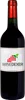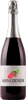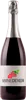
CavezzoLambrusco Salamino di Santa Croce Vino Frizzante Secco
 wine
wine
This wine generally goes well with
The Lambrusco Salamino di Santa Croce Vino Frizzante Secco of the Cavezzo is in the top 0 of wines of Lambrusco Salamino di Santa Croce.
Details and technical informations about Cavezzo's Lambrusco Salamino di Santa Croce Vino Frizzante Secco.
Discover the grape variety: Italia Rubi
Pink selection made in Brazil, following a natural coloured mutation of the italia, discovered in 1981 by San Giorgio Jonico. Since 24.08.2009, it is registered in the Official Catalogue of table grape varieties, list A1. In Italy, a more colourful mutation of the Rubi was discovered, called benitaka, which is more uniform in berry colour and ripens about a week earlier. The black brasil variety, which can be found in Brazil, is said to be a natural mutation of benitaka. Finally, Rubi should not be confused with ruby seedless, also a pink apyrene grape.
Informations about the Cavezzo
The Cavezzo is one of of the world's greatest estates. It offers 8 wines for sale in the of Lambrusco Salamino di Santa Croce to come and discover on site or to buy online.

The wine region of Lambrusco Salamino di Santa Croce
The wine region of Lambrusco Salamino di Santa Croce is located in the region of Émilie-Romagne of Italy. Wineries and vineyards like the Domaine Vigneto Saetti or the Domaine Torre Colle produce mainly wines sparkling, red and pink. On the nose of Lambrusco Salamino di Santa Croce often reveals types of flavors of cherry, blueberry or raspberry and sometimes also flavors of red fruit, black fruit or non oak. In the mouth of Lambrusco Salamino di Santa Croce is a with a nice balance between acidity and tannins.
The wine region of Emilia-Romagna
Romagna/emilia">Emilia-Romagna is a Rich and fertile region in Northern Italy, and one of the country's most prolific wine-producing regions, with over 58,000 hectares (143,320 acres) of vines in 2010. It is 240 kilometers (150 miles) wide and stretches across almost the entire northern Italian peninsula, sandwiched between Tuscany to the South, Lombardy and Veneto to the north and the Adriatic Sea to the east. Nine miles of Liguria is all that separates Emilia-Romagna from the Ligurian Sea, and its uniqueness as the only Italian region with both an east and west coast. Emilia-Romagna's wine-growing heritage dates back to the seventh century BC, making it one of the oldest wine-growing regions in Italy.
The word of the wine: Chaptalization
The addition of sugar at the time of fermentation of the must, an ancient practice, but theorized by Jean-Antoine Chaptal at the dawn of the 19th century. The sugar is transformed into alcohol and allows the natural degree of the wine to be raised in a weak or cold year, or - more questionably - when the winegrower has a harvest that is too large to obtain good maturity.