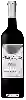
Caves BorlidoS.Vicente Tinto
 Red wine
In the mouth this red wine is a powerful with a nice balance between acidity and tannins.
This wine generally goes well with poultry, beef or game (deer, venison).
Taste structure of the S.Vicente Tinto from the Caves Borlido
Light | Bold | |
Smooth | Tannic | |
Dry | Sweet | |
Soft | Acidic |
In the mouth the S.Vicente Tinto of Caves Borlido in the region of Beiras is a powerful with a nice balance between acidity and tannins.
Food and wine pairings with S.Vicente Tinto
Pairings that work perfectly with S.Vicente Tinto



Original food and wine pairings with S.Vicente Tinto

The S.Vicente Tinto of Caves Borlido matches generally quite well with dishes of beef, lamb or game (deer, venison) such as recipes of roast beef with caramelized onion, merguez - courgettes gratin (leftover barbecue) or venison leg marinated in white wine and grand marnier.
Details and technical informations about Caves Borlido's S.Vicente Tinto.
Discover the grape variety: Ondenc
Ondenc is a white grape variety from the southwest of France, particularly present in the vineyards of Bergerac, Duras, Montravel and Gaillac, and is very sensitive to disease, but vigorous and fertile. Pruned short, this variety resists very well to the autan wind. ondenc gives dry or sweet white wines of a beautiful finesse. To gain in complexity, alcohol content and aromatic expression, it is often blended with other white grape varieties. When distilled, it is also the source of high quality perfumed eaux de vie. It is often used in the composition of AOC Côtes-de-Bergerac, Bordeaux, Côtes-de-Duras, Gaillac, etc. Ondenc accounts for less than 10 hectares in France, but is very present in Australia.
Informations about the Caves Borlido
The Caves Borlido is one of of the world's greatest estates. It offers 18 wines for sale in the of Dão to come and discover on site or to buy online.

The wine region of Dão
The wine region of Dão is located in the region of Beiras of Portugal. We currently count 316 estates and châteaux in the of Dão, producing 1397 different wines in conventional, organic and biodynamic agriculture. The wines of Dão go well with generally quite well with dishes .
The wine region of Beiras
Beiras (Beira) is a traditional administrative region in the northern half of Portugal. It is also the name of the IGP, or Indicacoes Geograficas Protegidas, wine classification (formerly known as Vinho Regional) which covers the region as a whole. A wide range of wines are made in Beiras – red wines from the region are typically Rich, deeply colored wines made from Baga, Castelão, Rufete (Tinto Pinheira), Merlot, Cabernet Sauvignon, Syrah and Touriga Nacional, and are sometimes fortified to emulate their more famous Oporto cousins. Whites are most often based on Fernão Pires and Bical, the latter being a small-berried variety with the affectionate nickname Borrado das Moscaos ('fly droppings').
The word of the wine: Maturation
Transformation undergone by the grape when it is enriched with sugar and loses some of its acidity to reach maturity.