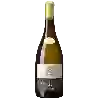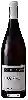
Cave de TainOrigine 1933 Saint-Joseph
 Red wine



In the mouth this red wine is a powerful with a nice balance between acidity and tannins.
This wine generally goes well with poultry, beef or game (deer, venison).
Taste structure of the Origine 1933 Saint-Joseph from the Cave de Tain
Light | Bold | |
Smooth | Tannic | |
Dry | Sweet | |
Soft | Acidic |
In the mouth the Origine 1933 Saint-Joseph of Cave de Tain in the region of Rhone Valley is a powerful with a nice balance between acidity and tannins.
Food and wine pairings with Origine 1933 Saint-Joseph
Pairings that work perfectly with Origine 1933 Saint-Joseph



Original food and wine pairings with Origine 1933 Saint-Joseph

The Origine 1933 Saint-Joseph of Cave de Tain matches generally quite well with dishes of beef, lamb or game (deer, venison) such as recipes of kamounia : tunisian beef stew, lamb mice confit and melting carrots or duckling with bigarrade.
Details and technical informations about Cave de Tain's Origine 1933 Saint-Joseph.
Discover the grape variety: Vermentino
The vermentino grape variety was widespread in Italy, Sardinia and Corsica. Today, Vermentino is grown in the regions bordering the Mediterranean, mainly in Provence (Côtes de Provence, Bellet), Corsica (Corse Calvi), Languedoc (Côtes du Roussillon, Costières de Nîmes) and the Rhône Valley (Côtes du Luberon). Because it ripens late, Vermentino requires a warm climate for its development and can only be grown in regions with good sun exposure. Conversely, cold or temperate climates do not allow it to ripen properly. Vermentino is only susceptible to powdery mildew. When vinified on its own, Vermentino produces a single-variety dry white wine that is light and full-bodied with a pale yellow color. It can also be blended with other grape varieties such as Ugni Blanc, Cinsault and Grenache, in which case its low acidity makes it light and fresh. Vermentino belongs to the grape varieties of Ajaccio, Corsica and Corbières. The aromas released by this variety are multiple. One can detect notes of fresh apple, green almond, sweet spices, hawthorn, ripe pear and fresh pineapple.
Last vintages of this wine
The best vintages of Origine 1933 Saint-Joseph from Cave de Tain are 2016, 2018, 2017, 2015
Informations about the Cave de Tain
The Cave de Tain is one of of the world's great estates. It offers 219 wines for sale in the of Saint-Joseph to come and discover on site or to buy online.

The wine region of Saint-Joseph
The wine region of Saint-Joseph is located in the region of Rhône septentrional of Rhone Valley of France. Wineries and vineyards like the Domaine Yves Gangloff or the Domaine E. Guigal produce mainly wines red and white. The most planted grape varieties in the region of Saint-Joseph are Marsanne, Roussanne and Mourvèdre, they are then used in wines in blends or as a single variety.
The wine region of Rhone Valley
The Rhone Valley is a key wine-producing region in Southeastern France. It follows the North-south course of the Rhône for nearly 240 km, from Lyon to the Rhône delta (Bouches-du-Rhône), near the Mediterranean coast. The Length of the valley means that Rhône wines are the product of a wide variety of soil types and mesoclimates. The viticultural areas of the region cover such a distance that there is a widely accepted division between its northern and southern parts.
The word of the wine: Presses
The juice that results from pressing the grapes after fermentation. At the end of the maceration, the vats are emptied, the first juice obtained is called the free-run wine and the marc remaining at the bottom of the vat is then pressed to give the press wine. We say more quickly "the presses". Their quality varies according to the vintage and the maceration. A too vigorous extraction releases the tannins of pips and the wine of press can then prove to be very astringent. Often the winemaker raises it separately, deciding later whether or not to incorporate it totally or partially into the grand vin.