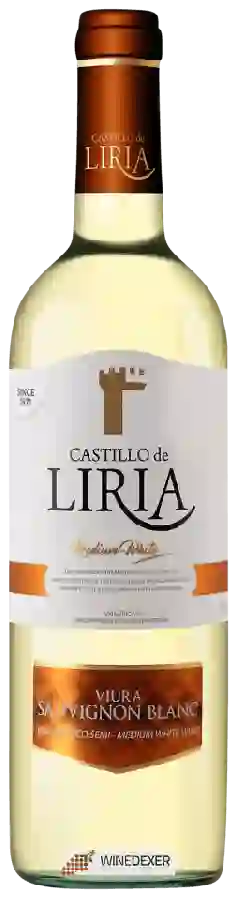
Winery Castillo de LiriaMedium White
 Sweet wine


This wine generally goes well with vegetarian, rich fish (salmon, tuna etc) or shellfish.

Wine flavors and olphactive analysis

On the nose the Medium White of Winery Castillo de Liria in the region of Valence often reveals types of flavors of vegetal, tree fruit or citrus fruit.
Food and wine pairings with Medium White
Pairings that work perfectly with Medium White



Original food and wine pairings with Medium White
The Medium White of Winery Castillo de Liria matches generally quite well with dishes of rich fish (salmon, tuna etc), shellfish or vegetarian such as recipes of spaghetti neapolitan style, tagliatelle with seafood and saffron cream or zucchini quiche.
Details and technical informations about Winery Castillo de Liria's Medium White.
Discover the grape variety: Grolleau
Vibrant and fruity rosés with a pale salmon colour, a tender palate and fresh acidity, on aromas of strawberry, raspberry, redcurrant, candy and spring flowers. Light and thirst-quenching finish. Star of Rosé d'Anjou AOC (a pleasing off-dry rosé) and backbone of Loire and Touraine rosés. Occasionally vinified as light reds and sparkling rosés. Native Loire grape from Anjou and Touraine, once the most widely planted variety in Anjou before Cabernet Franc.
Last vintages of this wine

The best vintages of Medium White from Winery Castillo de Liria are 2016, 2019, 2011, 2018 and 2017.
Informations about the Winery Castillo de Liria
The Winery Castillo de Liria is one of of the world's greatest estates. It offers 17 wines for sale in the of Valence to come and discover on site or to buy online.

The wine region of Valence
Sunny Mediterranean Levant, sun-drenched accessible wines. Monastrell (Mourvèdre) star red in Alicante: fleshy and deep with black fruits, garrigue, leather and spice, firm tannins. Round, fruity Bobal from Utiel-Requena, supple Garnacha, juicy Tempranillo. Fresh whites: light Merseguera, aromatic Moscatel (fresh grape, flowers).
The word of the wine: Grey (wine)
Wine obtained by vinifying white grapes with coloured skin (black or grey), by direct pressing, without maceration. It is a rosé with very little colour.


