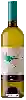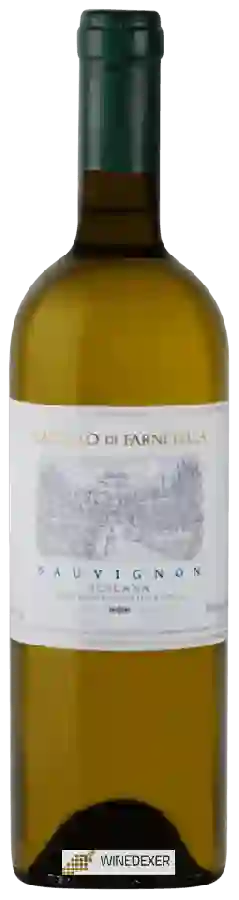
Winery Castello di FarnetellaSauvignon Toscana
 White wine



In the mouth this white wine is a powerful with a nice freshness.
This wine generally goes well with vegetarian, appetizers and snacks or lean fish.
Taste structure of the Sauvignon Toscana from the Winery Castello di Farnetella
Light | Bold | |
Dry | Sweet | |
Soft | Acidic |
In the mouth the Sauvignon Toscana of Winery Castello di Farnetella in the region of Tuscany is a powerful with a nice freshness.
Food and wine pairings with Sauvignon Toscana
Pairings that work perfectly with Sauvignon Toscana



Original food and wine pairings with Sauvignon Toscana


The Sauvignon Toscana of Winery Castello di Farnetella matches generally quite well with dishes of pasta, vegetarian or appetizers and snacks such as recipes of ham lasagness, leek, goat cheese and bacon quiche or autumn verrine.
Details and technical informations about Winery Castello di Farnetella's Sauvignon Toscana.
Discover the grape variety: Sercial
Portuguese, an ancient grape variety cultivated in particular in the Minho region and on the island of Madeira. It should not be confused with the cerceal branco and cerceal du Dâo, which are also related to the ramisco, trincadeira from Alentejo, alvarelhâo from Douro, etc. The Sercial can be found in Portugal, Spain, Italy, Bulgaria, Ukraine, Crimea, Russia, Argentina, South Africa, ... little known in France.
Last vintages of this wine
The best vintages of Sauvignon Toscana from Winery Castello di Farnetella are 0
Informations about the Winery Castello di Farnetella
The Winery Castello di Farnetella is one of of the world's greatest estates. It offers 10 wines for sale in the of Tuscany to come and discover on site or to buy online.

The wine region of Tuscany
Tuscany is one of the most famous and prolific wine regions in Europe. It is best known for its Dry red wines made from Sangiovese grapes, which dominate production. These include Chianti, Brunello di Montalcino and Vino Nobile di Montepulciano. The region's Vin Santo is also highly prized, as are its passito dessert wines, though these are produced in comparatively tiny quantities.
The word of the wine: Flintstone
Said of an aroma that evokes the smell of flint just from sparking.