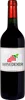
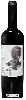
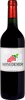
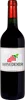
Winery CaracolilloCrianza
 Red wine
In the mouth this red wine is a powerful.
This wine generally goes well with poultry, beef or veal.
Taste structure of the Crianza from the Winery Caracolillo
Light | Bold | |
Smooth | Tannic | |
Dry | Sweet | |
Soft | Acidic |
In the mouth the Crianza of Winery Caracolillo in the region of Castille is a powerful.
Food and wine pairings with Crianza
Pairings that work perfectly with Crianza



Original food and wine pairings with Crianza

The Crianza of Winery Caracolillo matches generally quite well with dishes of beef, pasta or veal such as recipes of fresh sausage, chinese soy and chicken noodles (wok style) or veal tagine with artichokes and lemons.
Details and technical informations about Winery Caracolillo's Crianza.
Discover the grape variety: Negro Aramo
Its country of origin is Greece - it is related to the Greek xynomavro grape variety - and it has been cultivated for a long time in southern Italy, particularly in the southern region of Puglia, although it is known throughout the country. It should not be confused with aglianico, with which it has some synonyms. It should be noted that there is an early Negro Aramo clone. We can also meet the Negro Aramo in England, Australia, New Zealand, the United States (California, ...), ... in France it is almost unknown.
Informations about the Winery Caracolillo
The Winery Caracolillo is one of of the world's greatest estates. It offers 6 wines for sale in the of La Mancha to come and discover on site or to buy online.

The wine region of La Mancha
The wine region of La Mancha is located in the region of Castille of Spain. Wineries and vineyards like the Domaine Cinco Estrellas or the Domaine Munoz produce mainly wines red, white and pink. The most planted grape varieties in the region of La Mancha are Tempranillo, Cabernet-Sauvignon and Merlot, they are then used in wines in blends or as a single variety. On the nose of La Mancha often reveals types of flavors of cherry, mint or jasmine and sometimes also flavors of sweet tobacco, graphite or grass.
The wine region of Castille
Castilla-La Mancha is a large region located South and east of the Spanish capital, Madrid. Inexpensive table wines are produced from a variety of Grapes. Higher quality wines are increasingly available, but the region is traditionally known as a source of low quality bulk wine. More than half of Spain's grapes are grown here.
The word of the wine: Terroir
Strictly speaking, the notion of terroir corresponds to the geological characteristics of a vineyard. However, when we talk about terroir, we take into account the soil, the climate (even the microclimate), the flora, the fauna, and the human factor that characterizes the practices that make up the art of the craft.