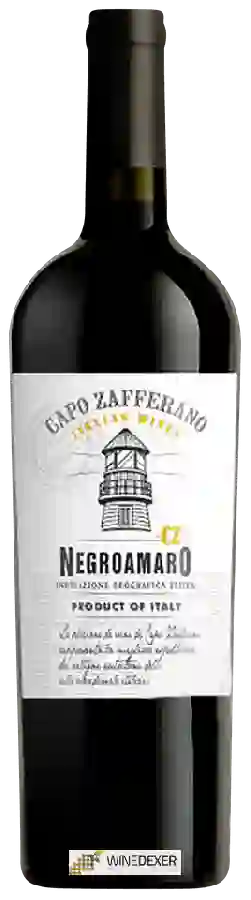
Winery Capo ZafferanoNegroamaro
 Red wine


In the mouth this red wine is a powerful with a lot of tannins present in the mouth.
This wine generally goes well with beef, lamb or pasta.

Taste structure of the Negroamaro from the Winery Capo Zafferano
Light | Bold | |
Smooth | Tannic | |
Dry | Sweet | |
Soft | Acidic |
In the mouth the Negroamaro of Winery Capo Zafferano in the region of Puglia is a powerful with a lot of tannins present in the mouth.
Food and wine pairings with Negroamaro
Pairings that work perfectly with Negroamaro



Original food and wine pairings with Negroamaro
The Negroamaro of Winery Capo Zafferano matches generally quite well with dishes of beef, pasta or lamb such as recipes of lomo saltado, roast beef in a foie gras and chanterelle crust or original mafé with okra.
Details and technical informations about Winery Capo Zafferano's Negroamaro.
Discover the grape variety: Ugni blanc
Dry, neutral and nervy whites with a pale robe, slender mouthfeel and sharp acidity, with discreet aromas of citrus, green apple, white flowers and herbaceous notes. The ideal profile for distillation: absolute pillar of Cognac AOC (over 95% of the Charentes vineyard) and Armagnac AOC. Also produced as still whites in Provence, Languedoc and Corsica. French synonym for Italian Trebbiano Toscano, one of the most planted varieties in the world.
Last vintages of this wine
The best vintages of Negroamaro from Winery Capo Zafferano are 0, 2016
Informations about the Winery Capo Zafferano
The Winery Capo Zafferano is one of of the world's greatest estates. It offers 9 wines for sale in the of Puglia to come and discover on site or to buy online.

The wine region of Puglia
Heel of the boot, 80% red vineyard, sunny and generous. Fleshy, jammy Primitivo (= Zinfandel) with notes of black cherry, plum, chocolate and spices, powerful alcohol and melted tannins, a star in Primitivo di Manduria. Deep, structured Negroamaro (black-bitter) with a bitter finish in Salice Salentino. Structured Nero di Troia, spicy Susumaniello.
The word of the wine: Residual sugars
Sugars not transformed into alcohol and naturally present in the wine. The perception of residual sugars is conditioned by the acidity of the wine. The more acidic the wine is, the less sweet it will seem, given the same amount of sugar.