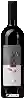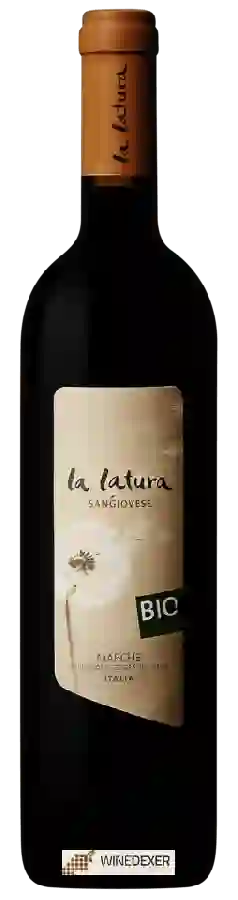
Winery Cantine VolpiLa Latura Sangiovese
 Red wine



In the mouth this red wine is a powerful with a nice balance between acidity and tannins.
This wine generally goes well with poultry, beef or veal.

Taste structure of the La Latura Sangiovese from the Winery Cantine Volpi
Light | Bold | |
Smooth | Tannic | |
Dry | Sweet | |
Soft | Acidic |
In the mouth the La Latura Sangiovese of Winery Cantine Volpi in the region of Marche is a powerful with a nice balance between acidity and tannins.
Food and wine pairings with La Latura Sangiovese
Pairings that work perfectly with La Latura Sangiovese



Original food and wine pairings with La Latura Sangiovese

The La Latura Sangiovese of Winery Cantine Volpi matches generally quite well with dishes of beef, pasta or veal such as recipes of beef bourguignon with tomato, chinese chicken soup or veal shoulder with cream and tarragon.
Details and technical informations about Winery Cantine Volpi's La Latura Sangiovese.
Discover the grape variety: Sangiovese
Firm, upright reds with precise acidity and angular tannins, showing aromas of sour cherry, plum, dried herbs, leather, black tea and balsamic notes. Characteristically bitter, savoury finish. Star of Chianti Classico DOCG, Brunello di Montalcino DOCG, Vino Nobile di Montepulciano DOCG and Morellino di Scansano. Italy's most planted variety, a descendant of Ciliegiolo × Calabrese di Montenuovo.
Last vintages of this wine
The best vintages of La Latura Sangiovese from Winery Cantine Volpi are 0, 2013
Informations about the Winery Cantine Volpi
The Winery Cantine Volpi is one of of the world's great estates. It offers 82 wines for sale in the of Marche to come and discover on site or to buy online.

The wine region of Marche
Italian star of Verdicchio: exceptional age-worthy whites, straight and mineral with signature notes of green almond, lemon, green apple, dry herbs and a slightly bitter finish. Two DOCGs: Castelli di Jesi (coastal, airy) and Matelica (inland, more concentrated). Mediterranean reds: fleshy Montepulciano in Rosso Conero near Ancona, supple Sangiovese. Also fresh Pecorino and Passerina.
The word of the wine: Honest
A simple and pleasant wine, without any great quality and without any defects.