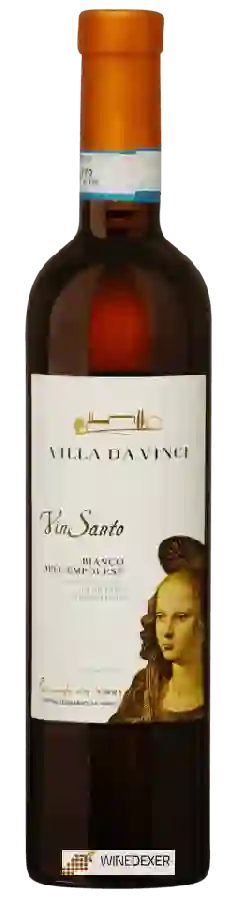
Winery Cantine Leonardo da VinciLeonardo Vin Santo Bianco dell'Empolese
 Sweet wine



This wine generally goes well with pork, beef or lamb.
Wine flavors and olphactive analysis




On the nose the Leonardo Vin Santo Bianco dell'Empolese of Winery Cantine Leonardo da Vinci in the region of Tuscany often reveals types of flavors of caramel, toffee or almonds and sometimes also flavors of non oak, earth or microbio.
Food and wine pairings with Leonardo Vin Santo Bianco dell'Empolese
Pairings that work perfectly with Leonardo Vin Santo Bianco dell'Empolese



Original food and wine pairings with Leonardo Vin Santo Bianco dell'Empolese

The Leonardo Vin Santo Bianco dell'Empolese of Winery Cantine Leonardo da Vinci matches generally quite well with dishes of beef, lamb or pork such as recipes of german recipe for marinated meat: sauerbraten, moroccan lamb stew or homemade burger.
Details and technical informations about Winery Cantine Leonardo da Vinci's Leonardo Vin Santo Bianco dell'Empolese.
Discover the grape variety: Bargine
This grape variety was formerly cultivated in the Jura and is said to have made the reputation of the Château-Châlon appellation. Today, it is no longer present in the vineyard.
Last vintages of this wine
The best vintages of Leonardo Vin Santo Bianco dell'Empolese from Winery Cantine Leonardo da Vinci are 2008, 2007, 2009
Informations about the Winery Cantine Leonardo da Vinci
The Winery Cantine Leonardo da Vinci is one of of the world's great estates. It offers 86 wines for sale in the of Tuscany to come and discover on site or to buy online.

The wine region of Tuscany
Tuscany is one of the most famous and prolific wine regions in Europe. It is best known for its Dry red wines made from Sangiovese grapes, which dominate production. These include Chianti, Brunello di Montalcino and Vino Nobile di Montepulciano. The region's Vin Santo is also highly prized, as are its passito dessert wines, though these are produced in comparatively tiny quantities.
The word of the wine: Stave
A slat of wood that makes up the barrel.