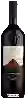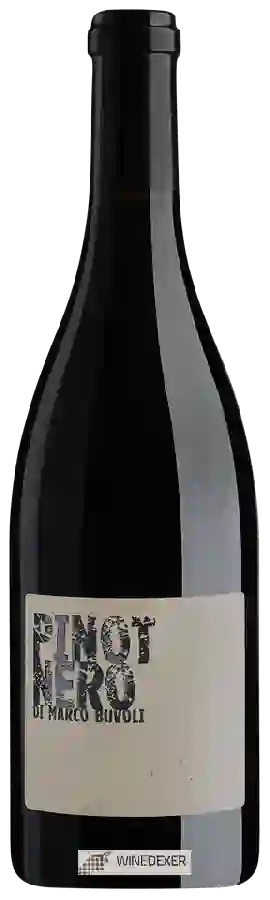
Winery BuvoliPinot Nero
 Red wine


In the mouth this red wine is a with a nice freshness.
This wine generally goes well with poultry, beef or veal.
Taste structure of the Pinot Nero from the Winery Buvoli
Light | Bold | |
Smooth | Tannic | |
Dry | Sweet | |
Soft | Acidic |
In the mouth the Pinot Nero of Winery Buvoli in the region of Veneto is a with a nice freshness.
Wine flavors and olphactive analysis



On the nose the Pinot Nero of Winery Buvoli in the region of Veneto often reveals types of flavors of spices.
Food and wine pairings with Pinot Nero
Pairings that work perfectly with Pinot Nero



Original food and wine pairings with Pinot Nero

The Pinot Nero of Winery Buvoli matches generally quite well with dishes of beef, veal or game (deer, venison) such as recipes of monkfish with vegetable tagliatelle, veal saltimbocca or roast duck in the oven.
Details and technical informations about Winery Buvoli's Pinot Nero.
Discover the grape variety: Bertille Seyve 450
Interspecific crossing carried out by Bertille Seyve (1864-1944) between the 2003 Seibel and the Noah, which it closely resembles. It was mainly cultivated in the western departments of France, but also in the Rhône valley and the Ain.
Last vintages of this wine

The best vintages of Pinot Nero from Winery Buvoli are 2016, 2013, 2010, 0 and 2015.
Informations about the Winery Buvoli
The Winery Buvoli is one of of the world's greatest estates. It offers 16 wines for sale in the of Veneto to come and discover on site or to buy online.

The wine region of Veneto
Veneto is an important and growing wine region in northeastern Italy. Veneto is administratively Part of the Triveneto area, aLong with its smaller neighbors, Trentino-Alto Adige and Friuli-Venezia Giulia. In terms of geography, culture and wine styles, it represents a transition from the Alpine and Germanic-Slavic end of Italy to the warmer, drier, more Roman lands to the South. Veneto is slightly smaller than the other major Italian wine regions - Piedmont, Tuscany, Lombardy, Puglia and Sicily - but it produces more wine than any of them.
The word of the wine: Tanin
A natural compound contained in the skin of the grape, the seed or the woody part of the bunch, the stalk. The maceration of red wines allows the extraction of tannins, which give the texture, the solidity and also the mellowness when the tannins are "ripe". The winemaker seeks above all to extract the tannins from the skin, the ripest and most noble. The tannins of the seed or stalk, which are "greener", especially in average years, give the wine hardness and astringency. The wines of Bordeaux (based on Cabernet and Merlot) are full of tannins, those of Burgundy much less so, with Pinot Noir containing little.