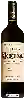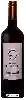
Maison BoueyBlason de Puissegin Saint-Émilion
 Red wine


In the mouth this red wine is a powerful with a nice balance between acidity and tannins.
This wine generally goes well with poultry, beef or game (deer, venison).
Taste structure of the Blason de Puissegin Saint-Émilion from the Maison Bouey
Light | Bold | |
Smooth | Tannic | |
Dry | Sweet | |
Soft | Acidic |
In the mouth the Blason de Puissegin Saint-Émilion of Maison Bouey in the region of Bordeaux is a powerful with a nice balance between acidity and tannins.
Food and wine pairings with Blason de Puissegin Saint-Émilion
Pairings that work perfectly with Blason de Puissegin Saint-Émilion



Original food and wine pairings with Blason de Puissegin Saint-Émilion

The Blason de Puissegin Saint-Émilion of Maison Bouey matches generally quite well with dishes of beef, lamb or game (deer, venison) such as recipes of fillet of beef with morels, greek-style shepherd's pie or roast venison with green pepper sauce.
Details and technical informations about Maison Bouey's Blason de Puissegin Saint-Émilion.
Discover the grape variety: Narince
This grape variety is native to Turkey, where it is very well known and highly appreciated. In this country, it is very often grown at high altitudes. It is believed to be the result of a natural intraspecific cross between Dimrit Kara and Kalecik Karasi. Almost unknown in France, it is no more so in other wine-producing countries.
Last vintages of this wine

The best vintages of Blason de Puissegin Saint-Émilion from Maison Bouey are 2010, 2014, 2018, 2009 and 2015.
Informations about the Maison Bouey
The Maison Bouey is one of wineries to follow in Puisseguin-Saint-Émilion.. It offers 509 wines for sale in the of Puisseguin-Saint-Émilion to come and discover on site or to buy online.

The wine region of Puisseguin-Saint-Émilion
The wine region of Puisseguin-Saint-Émilion is located in the region of Saint-Émilion of Bordeaux of France. Wineries and vineyards like the Domaine Les Hauts Du Bourdonnais or the Domaine La Mauriane produce mainly wines red and white. The most planted grape varieties in the region of Puisseguin-Saint-Émilion are Merlot, Cabernet-Sauvignon and Cabernet franc, they are then used in wines in blends or as a single variety. On the nose of Puisseguin-Saint-Émilion often reveals types of flavors of oaky, anise or mint and sometimes also flavors of cinnamon, black olive or violet.
The wine region of Bordeaux
Bordeaux, in southwestern France, is one of the most famous, prestigious and prolific wine regions in the world. The majority of Bordeaux wines (nearly 90% of the production Volume) are the Dry, medium and Full-bodied red Bordeaux blends for which it is famous. The finest (and most expensive) are the wines of the great châteaux of Haut-Médoc and the right bank appellations of Saint-Émilion and Pomerol. The former focuses (at the highest level) on Cabernet Sauvignon, the latter on Merlot.
The word of the wine: Provignage
A vine reproduction technique that consists of burying a vine shoot that takes root and reproduces a plant with the same characteristics as the vine to which it is attached.