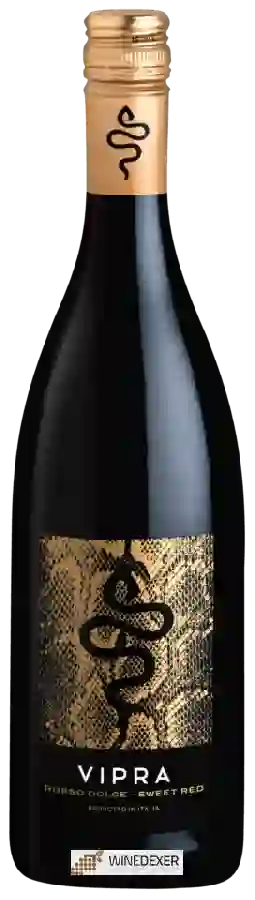
Winery BigiVipra Rosso Dolce
 Red wine


In the mouth this red wine is a powerful.
This wine generally goes well with beef, game (deer, venison) or lamb.

Taste structure of the Vipra Rosso Dolce from the Winery Bigi
Light | Bold | |
Smooth | Tannic | |
Dry | Sweet | |
Soft | Acidic |
In the mouth the Vipra Rosso Dolce of Winery Bigi in the region of Emilia-Romagna is a powerful.
Wine flavors and olphactive analysis

On the nose the Vipra Rosso Dolce of Winery Bigi in the region of Emilia-Romagna often reveals types of flavors of red fruit, black fruit or dried fruit.
Food and wine pairings with Vipra Rosso Dolce
Pairings that work perfectly with Vipra Rosso Dolce



Original food and wine pairings with Vipra Rosso Dolce

The Vipra Rosso Dolce of Winery Bigi matches generally quite well with dishes of beef, pasta or lamb such as recipes of beef tongue with vegetables and madeira sauce, lasagna bolognese or baekenofe (alsatian meat stew).
Details and technical informations about Winery Bigi's Vipra Rosso Dolce.
Discover the grape variety: Claverie
Simple, fresh dry whites with a pale golden colour, supple palate with moderate acidity, discreet aromas of white flowers and stone fruits from the Pyrenees. Productive. Often blended with Baroque, Arrufiac and Gros Manseng, contributes to South-West whites and Armagnac eau-de-vie distillation. French indigenous white variety from the South-West, mainly grown in Béarn and Tursan.
Last vintages of this wine
The best vintages of Vipra Rosso Dolce from Winery Bigi are 0
Informations about the Winery Bigi
The Winery Bigi is one of of the world's greatest estates. It offers 25 wines for sale in the of Emilia-Romagna to come and discover on site or to buy online.

The wine region of Emilia-Romagna
Kingdom of Lambrusco: fresh, fruity sparkling reds (blackberry, cherry, violet), from gourmet dry to convivial off-dry, perfect with local charcuterie. World's best-selling sparkling wine on the Emilia side (Sorbara, Grasparossa, Salamino). East, Romagna: supple fruity Sangiovese, Albana (Italy's 1st white DOCG, 1987) ample and almondy. Also red Gutturnio and white Pignoletto.
The word of the wine: Serious
A Bordeaux term for small pebbles from the Pyrenees, eroded, rounded and transported by the Garonne to Aquitaine. They are mainly found on the left bank in the area.... known as the Graves, and further downstream in the Médoc. By extension, gravel is found in other regions, brought by other rivers or even glaciers.




