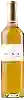
Winery Baronia de TurisMistela Moscatel
 Sweet wine



In the mouth this sweet wine is a powerful mainly marked by the residual sugar.
This wine generally goes well with poultry, beef or veal.

Taste structure of the Mistela Moscatel from the Winery Baronia de Turis
Light | Bold | |
Smooth | Tannic | |
Dry | Sweet | |
Soft | Acidic |
In the mouth the Mistela Moscatel of Winery Baronia de Turis in the region of Valence is a powerful mainly marked by the residual sugar.
Wine flavors and olphactive analysis


On the nose the Mistela Moscatel of Winery Baronia de Turis in the region of Valence often reveals types of flavors of earth, tree fruit.
Food and wine pairings with Mistela Moscatel
Pairings that work perfectly with Mistela Moscatel



Original food and wine pairings with Mistela Moscatel

The Mistela Moscatel of Winery Baronia de Turis matches generally quite well with dishes of beef, pasta or veal such as recipes of cataplana with seafood, lasagne bolognaise (mascarpone) or veal saltimbocca.
Details and technical informations about Winery Baronia de Turis's Mistela Moscatel.
Discover the grape variety: Douce noire
Supple, fruity reds with an intense ruby colour, soft tannins and a generous palate, showing signature aromas of red fruits (cherry, raspberry), plum, blackberry, soft spices and floral notes (violet). A charming style to drink young. A component of Savoie and Bugey blends, celebrated in California as Charbono and in Argentina as Bonarda. Indigenous French variety of Savoie and the Aosta Valley.
Last vintages of this wine
The best vintages of Mistela Moscatel from Winery Baronia de Turis are 0, 2016
Informations about the Winery Baronia de Turis
The Winery Baronia de Turis is one of of the world's greatest estates. It offers 66 wines for sale in the of Valence to come and discover on site or to buy online.

The wine region of Valence
Sunny Mediterranean Levant, sun-drenched accessible wines. Monastrell (Mourvèdre) star red in Alicante: fleshy and deep with black fruits, garrigue, leather and spice, firm tannins. Round, fruity Bobal from Utiel-Requena, supple Garnacha, juicy Tempranillo. Fresh whites: light Merseguera, aromatic Moscatel (fresh grape, flowers).
The word of the wine: pH
Short for "hydrogen potential", the pH is a parameter that defines whether a medium is acidic or basic. A high pH gives a soft wine, a very low pH translates into a wine that is too acidic.