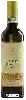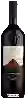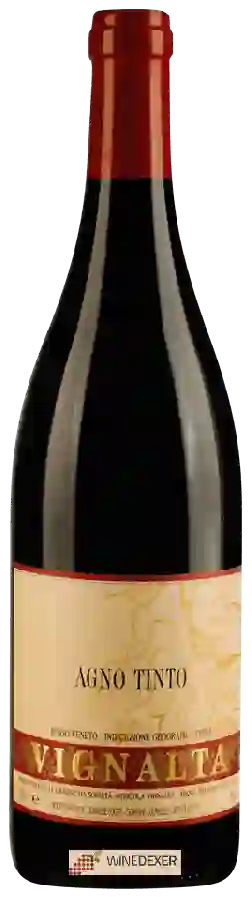
Winery VignaltaAgno Tinto
 Red wine


In the mouth this red wine is a powerful with a lot of tannins present in the mouth.
This wine generally goes well with beef, game (deer, venison) or lamb.
Taste structure of the Agno Tinto from the Winery Vignalta
Light | Bold | |
Smooth | Tannic | |
Dry | Sweet | |
Soft | Acidic |
In the mouth the Agno Tinto of Winery Vignalta in the region of Veneto is a powerful with a lot of tannins present in the mouth.
Wine flavors and olphactive analysis




On the nose the Agno Tinto of Winery Vignalta in the region of Veneto often reveals types of flavors of non oak, earth or microbio and sometimes also flavors of oak, spices or red fruit.
Food and wine pairings with Agno Tinto
Pairings that work perfectly with Agno Tinto



Original food and wine pairings with Agno Tinto

The Agno Tinto of Winery Vignalta matches generally quite well with dishes of beef, pasta or lamb such as recipes of braised beef with carrots, marco's pasta with bacon or sauté of lamb.
Details and technical informations about Winery Vignalta's Agno Tinto.
Discover the grape variety: Kernling
Natural mutation of the kerner found in Germany in 1974 by Herrn Ludwig Hochdörffer and put in culture in 1995. Kernling can be found in Germany, Switzerland, England, ... in France it is almost unknown.
Last vintages of this wine
The best vintages of Agno Tinto from Winery Vignalta are 2007, 2013, 2009, 2008 and 0.
Informations about the Winery Vignalta
The Winery Vignalta is one of of the world's greatest estates. It offers 38 wines for sale in the of Veneto to come and discover on site or to buy online.

The wine region of Veneto
Veneto is an important and growing wine region in northeastern Italy. Veneto is administratively Part of the Triveneto area, aLong with its smaller neighbors, Trentino-Alto Adige and Friuli-Venezia Giulia. In terms of geography, culture and wine styles, it represents a transition from the Alpine and Germanic-Slavic end of Italy to the warmer, drier, more Roman lands to the South. Veneto is slightly smaller than the other major Italian wine regions - Piedmont, Tuscany, Lombardy, Puglia and Sicily - but it produces more wine than any of them.
The word of the wine: Chaptalization
The addition of sugar at the time of fermentation of the must, an ancient practice, but theorized by Jean-Antoine Chaptal at the dawn of the 19th century. The sugar is transformed into alcohol and allows the natural degree of the wine to be raised in a weak or cold year, or - more questionably - when the winegrower has a harvest that is too large to obtain good maturity.