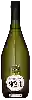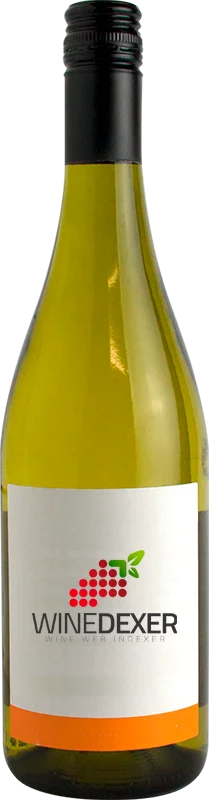
Winery Cà de MocenigoManzoni Bianco
 White wine
In the mouth this white wine is a powerful.
This wine generally goes well with lean fish, shellfish or mature and hard cheese.
Taste structure of the Manzoni Bianco from the Winery Cà de Mocenigo
Light | Bold | |
Dry | Sweet | |
Soft | Acidic |
In the mouth the Manzoni Bianco of Winery Cà de Mocenigo in the region of Friuli-Venezia Giulia is a powerful.
Food and wine pairings with Manzoni Bianco
Pairings that work perfectly with Manzoni Bianco



Original food and wine pairings with Manzoni Bianco


The Manzoni Bianco of Winery Cà de Mocenigo matches generally quite well with dishes of pasta, shellfish or mature and hard cheese such as recipes of roast beef in a foie gras and chanterelle crust, chicken chop suey or beaufort pie.
Details and technical informations about Winery Cà de Mocenigo's Manzoni Bianco.
Discover the grape variety: Mondeuse noire
Cultivated for a very long time in Savoie, it is not the black form of mondeuse blanche and Mondeuse grise is a natural mutation of mondeuse noire. According to Thierry Lacombe (I.N.R.A./Montpellier), the latter is the result of a natural intraspecific crossing between the black tressot and the white mondeuse. Mondeuse grise and Mondeuse noire are both registered in the official catalogue of wine grape varieties, list A1.
Informations about the Winery Cà de Mocenigo
The Winery Cà de Mocenigo is one of of the world's greatest estates. It offers 6 wines for sale in the of Friuli-Venezia Giulia to come and discover on site or to buy online.

The wine region of Friuli-Venezia Giulia
Friuli-Venezia Giulia is an autonomous region in Italy, located in the extreme Northeast of the country, bordered by Austria and Slovenia to the north and east respectively. The eponymous wine region has four DOCGs, twelve DOCs and three PGIs and is best known for its white wine production. 77% of the region's wines are white, one of the highest proportions of any Italian region. The region's wines are distinctly different from other Italian wines in that they are made from non-traditional Grape varieties such as Sauvignon blanc, Riesling and Pinot blanc, as well as typically Italian varieties such as pinot gris and picolit.
The word of the wine: Bright
Said of a wine whose acidity is the dominant characteristic, making it fresh and nervous.