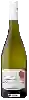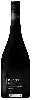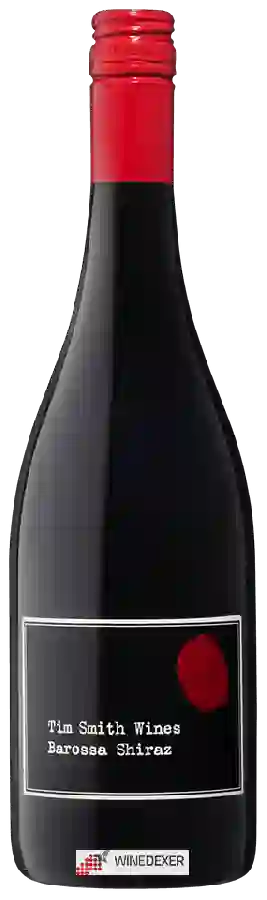
Winery Tim SmithBarossa Shiraz
 Red wine


In the mouth this red wine is a powerful with a lot of tannins present in the mouth.
This wine generally goes well with poultry, beef or game (deer, venison).
Taste structure of the Barossa Shiraz from the Winery Tim Smith
Light | Bold | |
Smooth | Tannic | |
Dry | Sweet | |
Soft | Acidic |
In the mouth the Barossa Shiraz of Winery Tim Smith in the region of Australie du Sud is a powerful with a lot of tannins present in the mouth.
Wine flavors and olphactive analysis




On the nose the Barossa Shiraz of Winery Tim Smith in the region of Australie du Sud often reveals types of flavors of cherry, oaky or blackberry and sometimes also flavors of blueberry, strawberries or vanilla.
Food and wine pairings with Barossa Shiraz
Pairings that work perfectly with Barossa Shiraz



Original food and wine pairings with Barossa Shiraz

The Barossa Shiraz of Winery Tim Smith matches generally quite well with dishes of beef, lamb or game (deer, venison) such as recipes of cornish pasties, moroccan lamb shoulder or rabbit with mushrooms.
Details and technical informations about Winery Tim Smith's Barossa Shiraz.
Discover the grape variety: Marzemino
A very old variety grown in northern Italy and recently in Sardinia. It can also be found in Greece, New Zealand, etc. In France it is practically unknown. It is most certainly related to Teroldego and Refosco dal Pedunculo Rosso and is said to be the brother of Lagrein, all three Italian varieties. It is also related to completer.
Last vintages of this wine
The best vintages of Barossa Shiraz from Winery Tim Smith are 2010, 2018, 2016, 2012 and 2015.
Informations about the Winery Tim Smith
The Winery Tim Smith is one of of the world's greatest estates. It offers 14 wines for sale in the of Barossa to come and discover on site or to buy online.

The wine region of Barossa
Barossa is one of the six wine-producing zones of SouthAustralia, and arguably the most recognized name in the Australian wine industry. Barossa wines have attracted more international awards than any other region in the country. It is divided into two sections: the western Barossa Valley (effectively the Warmer valley floor) and on the eastern side the cooler, higher altitude Eden Valley, both of which have a distinct Geographical Indication (GI) formalized in 1997. Grapegrowing conditions vary immensely across the wider Barossa zone and this is reflected in the markedly different wine styles produced here.
The wine region of Australie du Sud
SouthAustralia is one of Australia's six states, located (as the name suggests) in the south of the vast island continent. It's the engine room of the Australian wine industry, responsible for about half of the country's total production each year. But there's more to the region than quantity - countless high-quality wines are produced here, most from the region's signature Grape, Shiraz. These include such fine, collectible wines as Penfolds Grange, Henschke Hill of Grace, Torbreck The Laird and d'Arenberg The Dead Arm.
The word of the wine: Crémant
AOC sparkling wine made by traditional method, with specific constraints in the regions of Alsace, Bordeaux, Burgundy, Die, Jura, Limoux and the Loire Valley, as well as in Luxembourg.