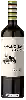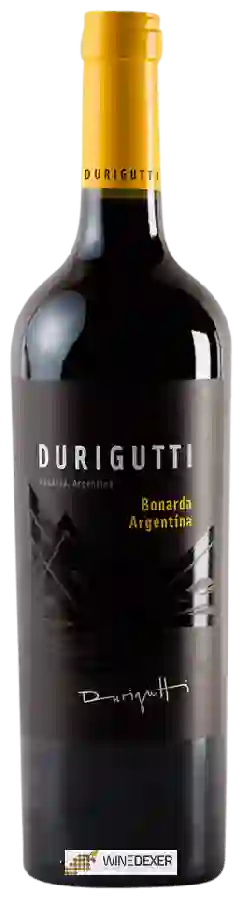
Winery DuriguttiDurigutti Bonarda
 Red wine



In the mouth this red wine is a powerful with a nice freshness.
This wine generally goes well with pork, poultry or veal.

Taste structure of the Durigutti Bonarda from the Winery Durigutti
Light | Bold | |
Smooth | Tannic | |
Dry | Sweet | |
Soft | Acidic |
In the mouth the Durigutti Bonarda of Winery Durigutti in the region of Mendoza is a powerful with a nice freshness.
Wine flavors and olphactive analysis






On the nose the Durigutti Bonarda of Winery Durigutti in the region of Mendoza often reveals types of flavors of non oak, earth or microbio and sometimes also flavors of vegetal, oak or tree fruit.
Food and wine pairings with Durigutti Bonarda
Pairings that work perfectly with Durigutti Bonarda



Original food and wine pairings with Durigutti Bonarda

The Durigutti Bonarda of Winery Durigutti matches generally quite well with dishes of veal, pork or game (deer, venison) such as recipes of simple veal sauté, sauté of pork with chorizo or aiguillette of duck normandy style.
Details and technical informations about Winery Durigutti's Durigutti Bonarda.
Discover the grape variety: Sémillon Gris
Structured and aromatic whites with a pale golden to amber colour, a full palate and signature aromas of yellow fruits (peach, apricot), honey, white flowers and candied notes. A singular Bordeaux profile. Extremely rare, preserved for its heritage value, it survives in a few Bordeaux plots and features in confidential artisan blends alongside classic Sémillon. Grey-skinned mutation of Sémillon, the autochthonous Bordeaux variety.
Last vintages of this wine
The best vintages of Durigutti Bonarda from Winery Durigutti are 2017, 2015, 2013, 2016 and 2012.
Informations about the Winery Durigutti
The Winery Durigutti is one of of the world's great estates. It offers 64 wines for sale in the of Mendoza to come and discover on site or to buy online.

The wine region of Mendoza
World capital of Malbec: powerful, deep reds with blackberry, plum, violet and sweet spice, round tannins and vivid fruit. Also firm Cabernet Sauvignon, supple, juicy Bonarda, aromatic floral white Torrontés. High-altitude vineyards (800-1,700 m) at the foot of the Andes, dry continental climate irrigated by glacial waters. ~80% of Argentine output across 150,000 ha.
The word of the wine: Aroma
A pleasant smell that can be primary (or varietal, i.e. characteristic of the grape), secondary (resulting from fermentation) or tertiary (resulting from the aging of the wine in the bottle).