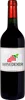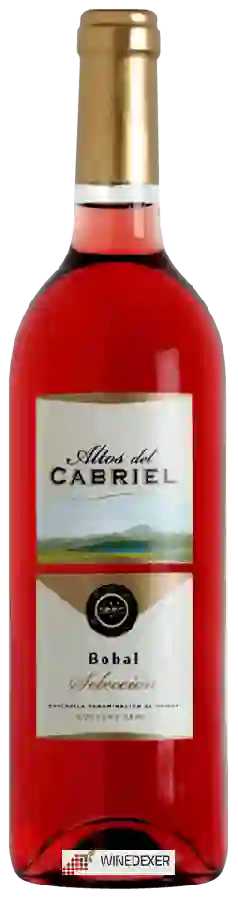
Winery Altos del CabrielSelecciόn Bobal
 Red wine


In the mouth this red wine is a powerful.
This wine generally goes well with poultry, beef or veal.
Taste structure of the Selecciόn Bobal from the Winery Altos del Cabriel
Light | Bold | |
Smooth | Tannic | |
Dry | Sweet | |
Soft | Acidic |
In the mouth the Selecciόn Bobal of Winery Altos del Cabriel in the region of Castille-et-Léon is a powerful.
Food and wine pairings with Selecciόn Bobal
Pairings that work perfectly with Selecciόn Bobal



Original food and wine pairings with Selecciόn Bobal

The Selecciόn Bobal of Winery Altos del Cabriel matches generally quite well with dishes of beef, pasta or veal such as recipes of veal shank with mushrooms, pasta shells or duck breast with red fruits.
Details and technical informations about Winery Altos del Cabriel's Selecciόn Bobal.
Discover the grape variety: Florental
Florental noir is a grape variety that originated in . This variety is the result of a cross between the same species (interspecific hybridization). It produces a variety of grape specially used for wine making. It is rare to find this grape for eating on our tables. The Florental noir is found in the vineyards of the Rhône Valley.
Last vintages of this wine
The best vintages of Selecciόn Bobal from Winery Altos del Cabriel are 0, 2014
Informations about the Winery Altos del Cabriel
The Winery Altos del Cabriel is one of of the world's greatest estates. It offers 4 wines for sale in the of Castille-et-Léon to come and discover on site or to buy online.

The wine region of Castille-et-Léon
Located in the northern half of the Central Iberian plateau, Castilla y León is the largest of Spain's 17 administrative regions, covering about one-fifth of the country's total area. It extends about 350 kilometres (220 miles) from central Spain to the northern coast. Just as wide, it connects the Rioja wine region to the Portuguese border. Red wines reign supreme in Castilla y León, and the Tempranillo grape is undoubtedly the king.
The word of the wine: Ancestral method
A method of making certain sparkling wines such as blanquette de Limoux, sparkling gaillac or clairette de Die, which consists of a second fermentation in the bottle based on natural sugars and yeasts naturally brought by the grapes (unlike the méthode champenoise, which requires the addition of tirage liquor).