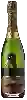
Winery Alsina & SardaCava sec
 Sparkling wine


In the mouth this sparkling wine is a with a nice vivacity and a fine and pleasant bubble.
This wine generally goes well with appetizers and snacks, lean fish or shellfish.
Taste structure of the Cava sec from the Winery Alsina & Sarda
Light | Bold | |
Soft | Acidic | |
Gentle | Fizzy |
In the mouth the Cava sec of Winery Alsina & Sarda in the region of Cava is a with a nice vivacity and a fine and pleasant bubble.
Food and wine pairings with Cava sec
Pairings that work perfectly with Cava sec



Original food and wine pairings with Cava sec


The Cava sec of Winery Alsina & Sarda matches generally quite well with dishes of shellfish, appetizers and snacks or lean fish such as recipes of fish shells, parmesan and poppy seed tuiles (5th meeting) or thai green curry chicken and eggplant.
Details and technical informations about Winery Alsina & Sarda's Cava sec.
Discover the grape variety: Négret castrais
The négret castrais is called mauzac noir. It is in the region of Toulouse that we find this variety doomed to disappear. Its origins are to be found in the Gaillac region, where it reaches maturity during the second period. The plant likes clay-limestone soils. It can be recognized by its late buds. Its bunches have short peduncles bearing compact, truncated cone-shaped loads. They are often winged and loaded with medium-sized berries. The pulp is covered with a thick skin whose colour is more or less red depending on the sun exposure of the bunch. Worms, excoliosis and powdery mildew are the main enemies of this variety. When vinified, Castres Negret gives off a fairly good character from its mauzac stock. The wine gives off notes of vanilla, apple, pear and jasmine. The juice is not very colourful and light in the mouth.
Last vintages of this wine
The best vintages of Cava sec from Winery Alsina & Sarda are 0
Informations about the Winery Alsina & Sarda
The Winery Alsina & Sarda is one of of the world's great estates. It offers 57 wines for sale in the of Cava to come and discover on site or to buy online.

The wine region of Cava
Cava is Spain's signature style of Sparkling wine, and the Iberian Peninsula's answer to Champagne. The traditional Grape varieties used in Cava were Macabeo, Parellada and Xarel-lo, but the Champagne varieties Chardonnay and Pinot Noir are also used. While the first Cava was produced exclusively in Catalonia - specifically in a small town called San Sadurní de Noya - modern Cava can be sourced from various regions of Spain. Aragon, Navarre, Rioja, Pais Vasco, Valencia and Extremadura have specific delimited areas that can benefit from the designation of origin.
The word of the wine: Breton
See cabernet franc.