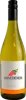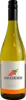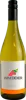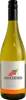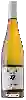
Winery Albert LambrichWeissburgunder
 White wine
In the mouth this white wine is a with a nice freshness.
This wine generally goes well with rich fish (salmon, tuna etc), shellfish or mild and soft cheese.
Taste structure of the Weissburgunder from the Winery Albert Lambrich
Light | Bold | |
Dry | Sweet | |
Soft | Acidic |
In the mouth the Weissburgunder of Winery Albert Lambrich in the region of Mittelrhein is a with a nice freshness.
Food and wine pairings with Weissburgunder
Pairings that work perfectly with Weissburgunder



Original food and wine pairings with Weissburgunder

The Weissburgunder of Winery Albert Lambrich matches generally quite well with dishes of rich fish (salmon, tuna etc), shellfish or mild and soft cheese such as recipes of quick salmon skewers, oven-roasted breton lobster with salted butter from the jaguin brothers (the... or croque-cake with ham.
Details and technical informations about Winery Albert Lambrich's Weissburgunder.
Discover the grape variety: Gold
Intraspecific crossing between A 3-94 (Hamburg Muscat x Sultana) and California K 3-78 (Hamburg Muscat x Queen of the Vines) obtained in the United States (California) in 1958 by Harold Paul Olmo (1909/2006). It can also be found in Greece, Cyprus, etc.
Informations about the Winery Albert Lambrich
The Winery Albert Lambrich is one of of the world's great estates. It offers 14 wines for sale in the of Mittelrhein to come and discover on site or to buy online.

The wine region of Mittelrhein
Mittelrhein is one of Germany's smaller wine regions, with around 468 hectares (1,156 acres) under Vine. A Long, thin region, it follows the course of the Rhine river between Rheinhessen/bingen">Bingen and Bonn, a distance of about 100 kilometers (60 miles) as the crow flies. At its Southern end, the region abuts the western edge of Rheinhessen and northern limits of the Nahe. It also intersects with the Mosel and Ahr regions, where their respective rivers Flow into the Rhine.
The word of the wine: Wiring
Action of periodically filling barrels containing wine, in order to offset evaporation and maintain a maximum level. The topping up allows to avoid the phenomenon of oxidation.