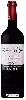
Winery A. de LuzeChâteau Fourcas-Hosten Listrac
 Red wine
This wine generally goes well with poultry, beef or veal.

Food and wine pairings with Château Fourcas-Hosten Listrac
Pairings that work perfectly with Château Fourcas-Hosten Listrac



Original food and wine pairings with Château Fourcas-Hosten Listrac

The Château Fourcas-Hosten Listrac of Winery A. de Luze matches generally quite well with dishes of beef, lamb or game (deer, venison) such as recipes of romazava (madagascar), lamb garam massala or rabbit with mustard in a casserole.
Details and technical informations about Winery A. de Luze's Château Fourcas-Hosten Listrac.
Discover the grape variety: Alphonse Lavallée
Table grape variety with long bunches, spherical black-violet berries, thick skin and crunchy flesh, with a sweet, neutral and juicy flavour. Very rarely vinified. Grown in southern France, Italy, Spain and the Maghreb, it remains one of the most appreciated table grapes for its beautiful appearance and pleasant taste. French black table grape obtained in 1860, cross of Gros Colman × Lady Downe's Seedling.
Informations about the Winery A. de Luze
The Winery A. de Luze is one of of the world's great estates. It offers 171 wines for sale in the of Listrac-Médoc to come and discover on site or to buy online.

The wine region of Listrac-Médoc
Communal AOC of the Médoc (peninsula, Quaternary gravel ridges): Cabernet Sauvignon (power, structure) with Merlot (fruit, roundness), Petit Verdot (spices, colour) and Cabernet Franc (finesse) — structured profile of black fruits (blackcurrant, blackberry), spicy and oaky notes, structured tannins and long ageing. Pyrenean-Massif Central erosion gravels on Landes sands, draining limestone and clays.
The wine region of Bordeaux
World-renowned age-worthy reds, led by round Merlot (plum, black fruit) or firm Cabernet Sauvignon (blackcurrant, cedar, graphite), blended with Cabernet Franc and Petit Verdot for tannic structure. Structured Médoc and Graves, velvety Saint-Émilion and Pomerol. Also crisp dry whites (Sauvignon/Sémillon) and opulent sweet Sauternes with honey and candied fruit. A 110,000 ha Gironde vineyard, 65 appellations, cradle of the 1855 classified growths.
The word of the wine: Water stress
Lack of water. Water stress blocks the vegetative cycle of the vine, which uses all available resources to maintain the integrity of the plant, thus blocking the ripening process of the grapes.