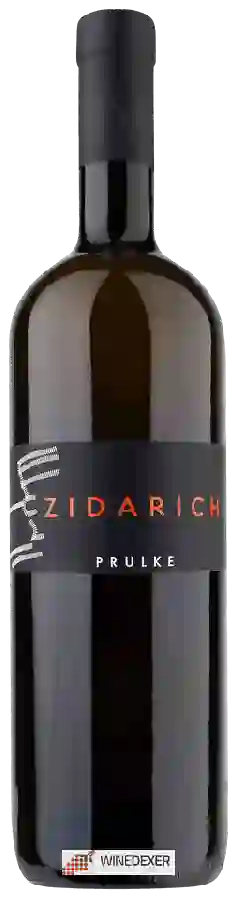
Winery ZidarichPrulke
 White wine


In the mouth this white wine is a powerful with a nice freshness.
This wine generally goes well with lean fish, shellfish or mature and hard cheese.

Taste structure of the Prulke from the Winery Zidarich
Light | Bold | |
Dry | Sweet | |
Soft | Acidic |
In the mouth the Prulke of Winery Zidarich in the region of Friuli-Venezia Giulia is a powerful with a nice freshness.
Wine flavors and olphactive analysis






On the nose the Prulke of Winery Zidarich in the region of Friuli-Venezia Giulia often reveals types of flavors of non oak, earth or microbio and sometimes also flavors of vegetal, oak or tree fruit.
Food and wine pairings with Prulke
Pairings that work perfectly with Prulke



Original food and wine pairings with Prulke


The Prulke of Winery Zidarich matches generally quite well with dishes of pasta, shellfish or mature and hard cheese such as recipes of capellini with prosciutto, zarzuela mayonapo or cantalian patranque !.
Details and technical informations about Winery Zidarich's Prulke.
Discover the grape variety: La Crescent
Aromatic off-dry and dry whites with a pale golden colour, a supple palate with lively acidity and signature muscat aromas (rose, fresh grape), exotic fruits (apricot, passion fruit) and white flowers. Extremely cold-hardy. Grown in the northern United States (Minnesota, Wisconsin, Iowa) and Canada for continental viticultural climates. White hybrid variety obtained in 2002 by the University of Minnesota.
Last vintages of this wine
The best vintages of Prulke from Winery Zidarich are 2005, 2017, 2016, 2012 and 2008.
Informations about the Winery Zidarich
The Winery Zidarich is one of of the world's greatest estates. It offers 16 wines for sale in the of Friuli-Venezia Giulia to come and discover on site or to buy online.

The wine region of Friuli-Venezia Giulia
Italian benchmark of great whites of elegance and minerality. Emblematic Friulano with notes of fresh almond, pear and white flowers, taut Ribolla Gialla, precise Pinot Grigio, lively Sauvignon and balanced Chardonnay. Rare sweet Picolit (DOCG), saline Malvasia Istriana. Rising reds: fruity spicy Refosco, more tannic Pignolo and Schioppettino.
The word of the wine: Passerillage
Concentration of the grape by drying out, under the influence of wind or sun, as opposed to botrytisation, which is the concentration obtained by the development of the "noble rot" for which Botrytis cinerea is responsible. The word is mainly used for sweet wines.