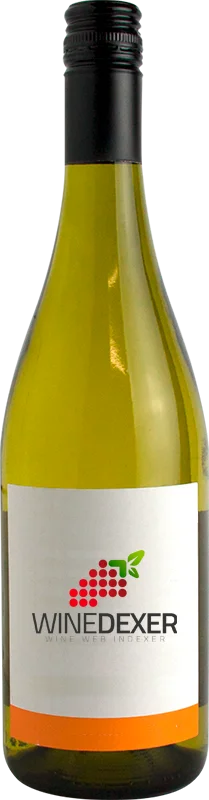
Winery ZapletalSauvignon Pozdní Sběr
 White wine


This wine generally goes well with vegetarian, rich fish (salmon, tuna etc) or shellfish.
Food and wine pairings with Sauvignon Pozdní Sběr
Pairings that work perfectly with Sauvignon Pozdní Sběr



Original food and wine pairings with Sauvignon Pozdní Sběr
The Sauvignon Pozdní Sběr of Winery Zapletal matches generally quite well with dishes of rich fish (salmon, tuna etc), shellfish or vegetarian such as recipes of tomato pie without tomato..., mouclade or quiche without eggs.
Details and technical informations about Winery Zapletal's Sauvignon Pozdní Sběr.
Discover the grape variety: Tzolikoouri
Most certainly finding its first origins in Georgia. It can be found in Italy, Germany, Slovak Republic, Ukraine, Republic of Moldova, Czech Republic, Romania, Bulgaria, Russia, ... in France, it is practically unknown.
Last vintages of this wine
The best vintages of Sauvignon Pozdní Sběr from Winery Zapletal are 0
Informations about the Winery Zapletal
The Winery Zapletal is one of of the world's great estates. It offers 30 wines for sale in the of Morava to come and discover on site or to buy online.

The wine region of Morava
Moravia, with roughly 95 percent of the nation's Vine plantings, is the engine room of the Czech Republic's wine industry. The Center of intensively farmed bulk-wine production is also showing great promise as a producer of quality white wines. This is largely thanks to its cool Climate, comparable in many ways to that in Nahe or Pfalz, the white-wine specialists a few hundred miles west in Germany. Moravian winelands enjoy a Vineyard year well suited to the production of Complex aromatics with good Acidity.
The word of the wine: Marcottage
A vine reproduction technique that consists of burying a vine shoot that takes root and reproduces a plant with the same characteristics as the vine to which it is attached (synonym: provignage).