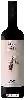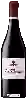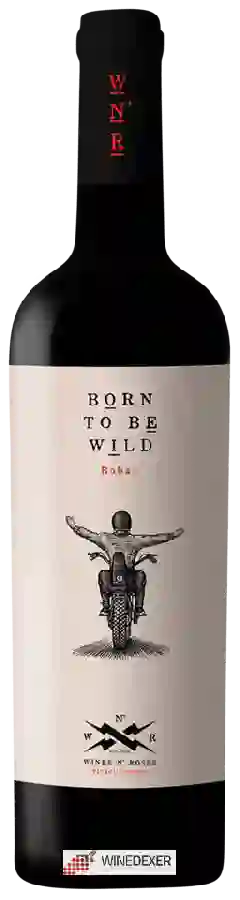
Winery Wines N' RosesBorn To Be Wild Bobal
 Red wine


In the mouth this red wine is a powerful with a nice balance between acidity and tannins.
This wine generally goes well with poultry, beef or veal.
Taste structure of the Born To Be Wild Bobal from the Winery Wines N' Roses
Light | Bold | |
Smooth | Tannic | |
Dry | Sweet | |
Soft | Acidic |
In the mouth the Born To Be Wild Bobal of Winery Wines N' Roses in the region of Castille is a powerful with a nice balance between acidity and tannins.
Wine flavors and olphactive analysis



On the nose the Born To Be Wild Bobal of Winery Wines N' Roses in the region of Castille often reveals types of flavors of oak, red fruit or black fruit.
Food and wine pairings with Born To Be Wild Bobal
Pairings that work perfectly with Born To Be Wild Bobal



Original food and wine pairings with Born To Be Wild Bobal

The Born To Be Wild Bobal of Winery Wines N' Roses matches generally quite well with dishes of beef, pasta or veal such as recipes of oxtail and carrot stew, pasta with zucchini or axoa from espelette ( 22nd meeting ).
Details and technical informations about Winery Wines N' Roses's Born To Be Wild Bobal.
Discover the grape variety: Bobal
This grape variety is widely cultivated in Spain under the name béni carlo. It was introduced into the Languedoc-Roussillon region of Narbonne around 1870.
Last vintages of this wine
The best vintages of Born To Be Wild Bobal from Winery Wines N' Roses are 2018, 0
Informations about the Winery Wines N' Roses
The Winery Wines N' Roses is one of of the world's greatest estates. It offers 8 wines for sale in the of Castille to come and discover on site or to buy online.

The wine region of Castille
Castilla-La Mancha is a large region located South and east of the Spanish capital, Madrid. Inexpensive table wines are produced from a variety of Grapes. Higher quality wines are increasingly available, but the region is traditionally known as a source of low quality bulk wine. More than half of Spain's grapes are grown here.
The word of the wine: Retrieved from
Wine that has lost its aromatic potential after prolonged aeration.