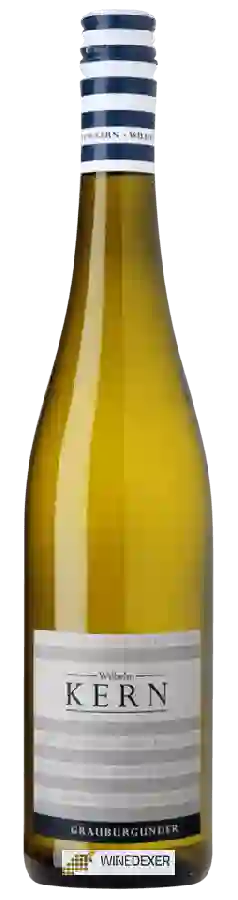
Winery Wilhelm KernGrauburgunder
 White wine



In the mouth this white wine is a .
This wine generally goes well with pork, cured meat or mushrooms.
Taste structure of the Grauburgunder from the Winery Wilhelm Kern
Light | Bold | |
Dry | Sweet | |
Soft | Acidic |
In the mouth the Grauburgunder of Winery Wilhelm Kern in the region of Württemberg is a .
Food and wine pairings with Grauburgunder
Pairings that work perfectly with Grauburgunder



Original food and wine pairings with Grauburgunder

The Grauburgunder of Winery Wilhelm Kern matches generally quite well with dishes of pork, spicy food or mushrooms such as recipes of alsatian sauerkraut, makrouna salsa (tunisian pastry) or pasta with ham.
Details and technical informations about Winery Wilhelm Kern's Grauburgunder.
Discover the grape variety: Guillemot
Most certainly from Béarn. It should not be confused with the blancard - or palougue - because they both have the same synonym coer de baco. The Guillemot is practically no longer present in the vineyard and is therefore on the verge of extinction. According to published genetic analyses, it is the result of a natural cross between the Manseng Noir and the Verjuice. For more information on other relatives, click here !
Last vintages of this wine
The best vintages of Grauburgunder from Winery Wilhelm Kern are 0
Informations about the Winery Wilhelm Kern
The Winery Wilhelm Kern is one of of the world's great estates. It offers 46 wines for sale in the of Württemberg to come and discover on site or to buy online.

The wine region of Württemberg
Württemberg is known as Germany's premier red wine region. With almost 11,500 hectares (28,500 acres) of vineyards, it is the fourth-largest wine region in the country. Found adjacent to Baden and South of Franken, Wüttemberg is a particularly hilly and rural wine-region. Almost 70-percent of Württemberg wines are red, predominantly made from Trollinger, SchwarzRiesling and Lemberger.
The word of the wine: Passerillage
Concentration of the grape by drying out, under the influence of wind or sun, as opposed to botrytisation, which is the concentration obtained by the development of the "noble rot" for which Botrytis cinerea is responsible. The word is mainly used for sweet wines.