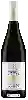
Weingut Schmitt-PeitzNahe Windesheimer Rosenberg Feinherb Blauer Spätburgunder
 Red wine
In the mouth this red wine is a with a nice freshness.
This wine generally goes well with poultry, beef or veal.
Taste structure of the Nahe Windesheimer Rosenberg Feinherb Blauer Spätburgunder from the Weingut Schmitt-Peitz
Light | Bold | |
Smooth | Tannic | |
Dry | Sweet | |
Soft | Acidic |
In the mouth the Nahe Windesheimer Rosenberg Feinherb Blauer Spätburgunder of Weingut Schmitt-Peitz in the region of Nahe is a with a nice freshness.
Food and wine pairings with Nahe Windesheimer Rosenberg Feinherb Blauer Spätburgunder
Pairings that work perfectly with Nahe Windesheimer Rosenberg Feinherb Blauer Spätburgunder



Original food and wine pairings with Nahe Windesheimer Rosenberg Feinherb Blauer Spätburgunder

The Nahe Windesheimer Rosenberg Feinherb Blauer Spätburgunder of Weingut Schmitt-Peitz matches generally quite well with dishes of beef, veal or game (deer, venison) such as recipes of beef with dark beer, alsatian fondue or duck with orange and honey.
Details and technical informations about Weingut Schmitt-Peitz's Nahe Windesheimer Rosenberg Feinherb Blauer Spätburgunder.
Discover the grape variety: Mouyssaguès
Mouyssaguès is a grape variety that originated in the southwest of France. Today it occupies just under a hectare, whereas in the past it filled the entire Lot valley. Its adult leaves have between 7 and 9 lobes. These turn completely red in the autumn. Its blue-black berries are elliptical and short. As for its truncated cone-shaped bunches, they are of medium size. They are also compact and winged. Mouyssaguès has only one approved clone, 1.150. A dozen others have been planted in Aveyron. Mouyssaguès can bud in the middle or late, 8 to 10 days after Chasselas. It ripens early for the second time. Vigorous, it is not very sensitive to the various diseases common to these grape varieties. Although productive, it is preferable to prune it long. The mouyssaguès makes a very astringent and coloured wine. This variety can also be called negret, faroneux, rouge menu or peyregord. Because of its high yield, it is often called the poor man's vine.
Informations about the Weingut Schmitt-Peitz
The Weingut Schmitt-Peitz is one of of the world's great estates. It offers 15 wines for sale in the of Nahe to come and discover on site or to buy online.

The wine region of Nahe
Nahe is one of the smaller German wine regions, named after the Nahe river which joins the Rhein at Rheinhessen/bingen">Bingen. The viticultural carea here is characterised by dramatic topography with steep slopes and craggy outcrops of metamorphic rock. Like most of the regions on or near the Rhine, its most prestigious wines are made from Riesling. There are around 4,000 hectares (10,000 acres) of Vineyards, spread across seven Grosslagen (wine districts) and over 300 Einzellagen (individual vineyard sites).
The word of the wine: Viscosity
Consistency of wine reminiscent of the tactile sensation of sugar syrup with varying degrees of fluidity, due to the alcohol and natural sugar in the grapes present in sweet wines. In excess, this sensation can make the wine pasty and heavy. To the eye, viscosity is referred to as tears.