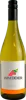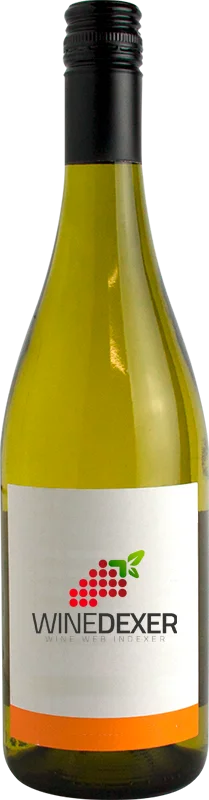
Weingut HeesWeissburgunder Trocken
 White wine



In the mouth this white wine is a with a nice freshness.
This wine generally goes well with rich fish (salmon, tuna etc), shellfish or mild and soft cheese.
Taste structure of the Weissburgunder Trocken from the Weingut Hees
Light | Bold | |
Dry | Sweet | |
Soft | Acidic |
In the mouth the Weissburgunder Trocken of Weingut Hees in the region of Nahe is a with a nice freshness.
Food and wine pairings with Weissburgunder Trocken
Pairings that work perfectly with Weissburgunder Trocken



Original food and wine pairings with Weissburgunder Trocken

The Weissburgunder Trocken of Weingut Hees matches generally quite well with dishes of rich fish (salmon, tuna etc), shellfish or mild and soft cheese such as recipes of red tuna steak provençal style, marmite dieppoise or hamburger raclette style.
Details and technical informations about Weingut Hees's Weissburgunder Trocken.
Discover the grape variety: Meunier
Meunier noir is a grape variety that originated in France (Champagne). It produces a variety of grape specially used for wine making. It is rare to find this grape to eat on our tables. This variety of grape is characterized by small bunches and small grapes. Meunier noir can be found in many vineyards: South West, Cognac, Bordeaux, Loire Valley, Champagne, Burgundy, Jura, Languedoc & Roussillon, Beaujolais, Lorraine, Provence & Corsica, Rhone Valley, Savoie & Bugey.
Last vintages of this wine
The best vintages of Weissburgunder Trocken from Weingut Hees are 0
Informations about the Weingut Hees
The Weingut Hees is one of of the world's greatest estates. It offers 36 wines for sale in the of Nahe to come and discover on site or to buy online.

The wine region of Nahe
Nahe is one of the smaller German wine regions, named after the Nahe river which joins the Rhein at Rheinhessen/bingen">Bingen. The viticultural carea here is characterised by dramatic topography with steep slopes and craggy outcrops of metamorphic rock. Like most of the regions on or near the Rhine, its most prestigious wines are made from Riesling. There are around 4,000 hectares (10,000 acres) of Vineyards, spread across seven Grosslagen (wine districts) and over 300 Einzellagen (individual vineyard sites).
The word of the wine: Performance
Quantity of grapes harvested per hectare. In AOC, the average yield is limited on the proposal of the appellation syndicate, validated by the Inao. The use of high-performance plant material (especially clones) and better control of vine diseases have increased yields. This is not without consequences on the quality of the wines (dilution) and on the state of the market (too much wine). We must not over-simplify: low yields are not synonymous with quality, and it is often in years with generous harvests that we find the greatest vintages (1982 and 1986 in Bordeaux, 1996 in Champagne, 1990 and 2005 in Burgundy...).