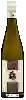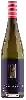
Weingut Beyer (DE)Weissburgunder Buntsandstein
 White wine



In the mouth this white wine is a with a nice freshness.
This wine generally goes well with rich fish (salmon, tuna etc), shellfish or mild and soft cheese.
Taste structure of the Weissburgunder Buntsandstein from the Weingut Beyer (DE)
Light | Bold | |
Dry | Sweet | |
Soft | Acidic |
In the mouth the Weissburgunder Buntsandstein of Weingut Beyer (DE) in the region of Rheingau is a with a nice freshness.
Food and wine pairings with Weissburgunder Buntsandstein
Pairings that work perfectly with Weissburgunder Buntsandstein



Original food and wine pairings with Weissburgunder Buntsandstein

The Weissburgunder Buntsandstein of Weingut Beyer (DE) matches generally quite well with dishes of rich fish (salmon, tuna etc), shellfish or mild and soft cheese such as recipes of quiche with leeks and fresh salmon from flo, carne de porco alentejana (sliced pork with vongoles) recipe... or potato and smoked salmon gratin.
Details and technical informations about Weingut Beyer (DE)'s Weissburgunder Buntsandstein.
Discover the grape variety: Dunkelfelder
Intraspecific crossing between the madeleine angevine and the dyer of Cher obtained in 1928 by Gustav Adolf (1847/1912) of the Research Institute in Geinsenheim (Germany). We can meet it certainly in Germany but also in Belgium, in Switzerland, in England, in the United States, in Canada... almost unknown in France. It should not be confused with the dornfelder, also of German origin.
Last vintages of this wine
The best vintages of Weissburgunder Buntsandstein from Weingut Beyer (DE) are 0
Informations about the Weingut Beyer (DE)
The Weingut Beyer (DE) is one of of the world's greatest estates. It offers 10 wines for sale in the of Johannisberg to come and discover on site or to buy online.

The wine region of Johannisberg
The wine region of Johannisberg is located in the region of Rheingau of Germany. Wineries and vineyards like the Domaine Prinz von Hessen or the Domaine Prinz von Hessen produce mainly wines white, red and sweet. The most planted grape varieties in the region of Johannisberg are Riesling, Sylvaner and Regent, they are then used in wines in blends or as a single variety. On the nose of Johannisberg often reveals types of flavors of non oak, earth or microbio and sometimes also flavors of oak, tree fruit or citrus fruit.
The wine region of Rheingau
Rheingau is one of the most important of Germany's 13 Anbaugebiete wine regions. However it is far from the biggest; with 3,076 hectares (7,600 acres) of Vineyard">Vineyards documented in 2012, its output is around one tenth of that from the Pfalz and Rheinhessen regions. Located on the Rhine a 20-minute drive west of Frankfurt, the -gau suffix denotes that it was once a county of the Frankish Empire. The classic Rheingau wine is a DryRiesling with pronounced Acidity and aromas of citrus fruits and smoke-tinged minerality – typically more "masculine" than its equivalent from the Mosel.
The word of the wine: Water stress
Lack of water. Water stress blocks the vegetative cycle of the vine, which uses all available resources to maintain the integrity of the plant, thus blocking the ripening process of the grapes.