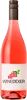
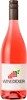
Winery Weingärtner Stromberg ZabergäuFantasie Muscat - Trollinger Rosé Fruchtig
 Pink wine
This wine generally goes well with spicy food and sweet desserts.
Food and wine pairings with Fantasie Muscat - Trollinger Rosé Fruchtig
Pairings that work perfectly with Fantasie Muscat - Trollinger Rosé Fruchtig


Original food and wine pairings with Fantasie Muscat - Trollinger Rosé Fruchtig
The Fantasie Muscat - Trollinger Rosé Fruchtig of Winery Weingärtner Stromberg Zabergäu matches generally quite well with dishes of spicy food or sweet desserts such as recipes of chicken colombo (west indies) or king's cake with frangipane.
Details and technical informations about Winery Weingärtner Stromberg Zabergäu's Fantasie Muscat - Trollinger Rosé Fruchtig.
Discover the grape variety: Bombino blanc
This grape variety was originally cultivated in the south of Italy, in the region of Puglia to be precise. Today, it can be found in many other Italian wine regions, including Abruzzo, Lazio, Marche, Emilia-Romagna, etc. In France, it is almost unknown. It certainly has many relatives of Italian origin, known or less known, without us being able to cite them with certainty, especially since we find identical synonyms for them. However, we can affirm that the Trebbiano of Abruzzo is not the white Bombino and that the black Bombino is not related to the white.
Informations about the Winery Weingärtner Stromberg Zabergäu
The Winery Weingärtner Stromberg Zabergäu is one of of the world's great estates. It offers 92 wines for sale in the of Württemberg to come and discover on site or to buy online.

The wine region of Württemberg
Württemberg is known as Germany's premier red wine region. With almost 11,500 hectares (28,500 acres) of vineyards, it is the fourth-largest wine region in the country. Found adjacent to Baden and South of Franken, Wüttemberg is a particularly hilly and rural wine-region. Almost 70-percent of Württemberg wines are red, predominantly made from Trollinger, SchwarzRiesling and Lemberger.
The word of the wine: Maceration
Prolonged contact and exchange between the juice and the grape solids, especially the skin. Not to be confused with the time of fermentation, which follows maceration. The juice becomes loaded with colouring matter and tannins, and acquires aromas. For a rosé, the maceration is short so that the colour does not "rise" too much. For white wines too, a "pellicular maceration" can be practised, which allows the wine to acquire more fat.