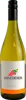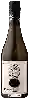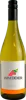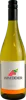
Winery BucheggerRied Tiefenthal Roter Veltliner
 White wine



This wine generally goes well with
Details and technical informations about Winery Buchegger's Ried Tiefenthal Roter Veltliner.
Discover the grape variety: Bronner
An interspecific cross between merzling and rondo obtained in 1975 by Norbert Becker of the Freiburg Research Institute in Germany. It has the particularity of having only one gene for resistance to mildew and powdery mildew. However, the I.N.R.A. Bordeaux Sciences Agro has since noted a loss of efficiency on mildew due to a bypass. It can be found in Denmark, the Netherlands, Germany, Belgium, Italy, England, etc. It is not very widespread today and is almost unknown in France. It should not be confused with another variety of the same name, which comes from a Pinot Blanc seedling, also obtained in Germany by Johann Philipp Bronner.
Last vintages of this wine
The best vintages of Ried Tiefenthal Roter Veltliner from Winery Buchegger are 2017, 2016, 2014, 0
Informations about the Winery Buchegger
The Winery Buchegger is one of of the world's great estates. It offers 30 wines for sale in the of Niederösterreich to come and discover on site or to buy online.

The wine region of Niederösterreich
Niederösterreich, or Lower Austria, is a wine region in the Northeast of Austria bordering Slovakia and the Czech Republic. It is the country's largest wine region, both geographically and in terms of production. There are around 28,000 hectares (69,000 acres) of vineyards. These are responsible for roughly half of Austria's total wine output.
The wine region of Weinland
Weinviertel DAC – whose name translates as "wine quarter" – is an appellation in Niederösterreich (Lower Austria). It is by far the largest Districtus Austriae Controllatus wine region in Austria. It was also the first Austrian wine region to be given that title, in 2002, with a DAC Reserve designation added in 2009. The designation applies only to white wines from the Grüner Veltliner Grape variety.
The word of the wine: Disgorging (champagne)
This is the evacuation of the deposit formed by the yeasts during the second fermentation in the bottle, by opening the bottle. The missing volume is completed with the liqueur de dosage - a mixture of wine and cane sugar - before the final cork is placed. For some years now, some producers have been replacing this sugar with rectified concentrated musts (concentrated grape juice) which give excellent results. A too recent dosage (less than three months) harms the gustatory harmony of the champagne.