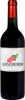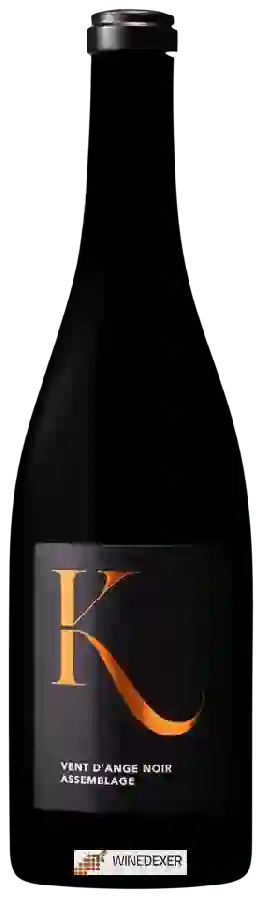
Winery Vins KellerVent d'Ange Noir Assemblage
 Red wine



This wine is a blend of 4 varietals which are the Cabernet-Sauvignon, the Diolinoir, the Gamaret and the Garanoir.
This wine generally goes well with poultry, beef or lamb.

Food and wine pairings with Vent d'Ange Noir Assemblage
Pairings that work perfectly with Vent d'Ange Noir Assemblage



Original food and wine pairings with Vent d'Ange Noir Assemblage

The Vent d'Ange Noir Assemblage of Winery Vins Keller matches generally quite well with dishes of beef, lamb or spicy food such as recipes of marinated shrimp skewers with garlic, leg of lamb brissac (leftover leg of lamb) or fish and shrimp curry.
Details and technical informations about Winery Vins Keller's Vent d'Ange Noir Assemblage.
Discover the grape variety: Cabernet-Sauvignon
Structured, tannic reds, deeply coloured, with aromas of blackcurrant, blackberry, cedar, tobacco and graphite, underpinned by firm acidity and fine ageing potential. Cornerstone of the great Médoc estates (Pauillac, Saint-Estèphe, Saint-Julien) and signature of Napa Valley, Coonawarra and Maipo. The world's most planted red variety, a natural cross of Cabernet Franc x Sauvignon Blanc born in Bordeaux.
Last vintages of this wine
The best vintages of Vent d'Ange Noir Assemblage from Winery Vins Keller are 2017, 0, 2016
Informations about the Winery Vins Keller
The Winery Vins Keller is one of of the world's greatest estates. It offers 17 wines for sale in the of Neuchâtel to come and discover on site or to buy online.

The wine region of Neuchâtel
Swiss vineyard on the western shore of the lake, 606 ha in the Three Lakes region. Signature Pinot Noir (55% of the vineyard, the local prince): fine, fresh reds with notes of cherry, raspberry, undergrowth and sweet spices, silky tannins. Specialty invented here: Œil-de-Perdrix, a delicate Pinot Noir rosé with salmon hues. Lively, mineral Chasselas (citrus, flint) in white, including the identity-marking Non-Filtré primeur.
The word of the wine: CM
Mention on the label of a champagne. It is a handling cooperative that produces on its own premises and markets under its own brand the wines made from the grapes harvested by its members.