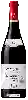
Domaine DescombeBeaujolais Nouveau
 Red wine
In the mouth this red wine is a with a nice freshness.
This wine generally goes well with pork, poultry or veal.

Taste structure of the Beaujolais Nouveau from the Domaine Descombe
Light | Bold | |
Smooth | Tannic | |
Dry | Sweet | |
Soft | Acidic |
In the mouth the Beaujolais Nouveau of Domaine Descombe in the region of Beaujolais is a with a nice freshness.
Food and wine pairings with Beaujolais Nouveau
Pairings that work perfectly with Beaujolais Nouveau



Original food and wine pairings with Beaujolais Nouveau

The Beaujolais Nouveau of Domaine Descombe matches generally quite well with dishes of pasta, veal or pork such as recipes of tuscan pastachute, veal chop with rosemary or very simple spaghetti carbonara.
Details and technical informations about Domaine Descombe's Beaujolais Nouveau.
Discover the grape variety: Carcajolo noir
Light, fruity reds with a clear ruby robe, soft tannins and an airy palate with preserved acidity on cherry, Mediterranean herbs and notes of Corsican maquis. Airy profile. Preserved for its patrimonial value in the Corsican CRVI collections and on a few parcels of growers attached to insular ampelography. Autochthonous black Corsican variety (synonym of Carcajolo Nero), grown in confidential quantities in Corse-du-Sud.
Informations about the Domaine Descombe
The Domaine Descombe is one of of the world's great estates. It offers 115 wines for sale in the of Beaujolais to come and discover on site or to buy online.

The wine region of Beaujolais
Kingdom of Gamay (98% of the vineyard): fruity, accessible reds with signature notes of cherry, raspberry, banana (carbonic maceration), violet and sweet spices, supple tannins and juicy acidity. From festive Beaujolais Nouveau (3rd Thursday of November) to the 10 more structured, age-worthy Crus: deep earthy Morgon, sturdy Moulin-à-Vent, floral Fleurie, crunchy Brouilly. Some lively Chardonnay. 12,000 ha south of Burgundy, granitic soils.
The word of the wine: Vintage (champagne)
It is a champagne made from a single harvest. In principle, we only vintage the great years: 1988, 1990, 1995, 1996... We find more often, now, the very good 2002, and the 2004, a little short.