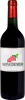
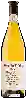
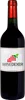
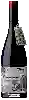
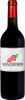
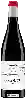
Winery ViniGaliciaSueño de España Tinto
 Red wine


In the mouth this red wine is a powerful with a lot of tannins present in the mouth.
This wine generally goes well with poultry, beef or veal.
Taste structure of the Sueño de España Tinto from the Winery ViniGalicia
Light | Bold | |
Smooth | Tannic | |
Dry | Sweet | |
Soft | Acidic |
In the mouth the Sueño de España Tinto of Winery ViniGalicia in the region of Galice is a powerful with a lot of tannins present in the mouth.
Food and wine pairings with Sueño de España Tinto
Pairings that work perfectly with Sueño de España Tinto



Original food and wine pairings with Sueño de España Tinto

The Sueño de España Tinto of Winery ViniGalicia matches generally quite well with dishes of beef, pasta or veal such as recipes of fondue vigneronne au vin rouge, fideuà (paella with pasta and fish) or veal tagine with potatoes and olives.
Details and technical informations about Winery ViniGalicia's Sueño de España Tinto.
Discover the grape variety: Cabernet blanc
Interspecific cross between Cabernet Sauvignon and a long-unknown grape variety - that would be Regent - obtained in 1991 by Valentin Blattner from Soyhières (Switzerland) and propagated by Volker Freytag (Germany). No resistance gene has been identified to either mildew or powdery mildew. Cabernet blanc can be found in Switzerland, Belgium, the Netherlands, Germany, Austria, Luxembourg, the Czech Republic, Italy, England, etc., but is still little known in France.
Last vintages of this wine

The best vintages of Sueño de España Tinto from Winery ViniGalicia are 2018, 0
Informations about the Winery ViniGalicia
The Winery ViniGalicia is one of of the world's great estates. It offers 66 wines for sale in the of Galice to come and discover on site or to buy online.

The wine region of Galice
Galicia is one of the 17 first-level administrative regions (called comunidades autónomas) of Spain. It occupies the northwestern corner of the Iberian Peninsula, and is exposed on two sides to the Atlantic Ocean. To the South is Portugal, to the east Castilla y Leon. Viticulture has a Long tradition in Galicia, introduced to the region by the ancient Romans and continued by monks throughout the Middle Ages.
The word of the wine: Barrel
Unit of measure for the transport and marketing of bulk wines, corresponding to 4 barrels of 225 l, i.e. 900 l.