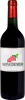
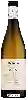
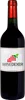
Winery ViniGaliciaMar de Rande
 Red wine



In the mouth this red wine is a powerful with a nice balance between acidity and tannins.
This wine generally goes well with poultry, beef or veal.
Taste structure of the Mar de Rande from the Winery ViniGalicia
Light | Bold | |
Smooth | Tannic | |
Dry | Sweet | |
Soft | Acidic |
In the mouth the Mar de Rande of Winery ViniGalicia in the region of Galice is a powerful with a nice balance between acidity and tannins.
Food and wine pairings with Mar de Rande
Pairings that work perfectly with Mar de Rande



Original food and wine pairings with Mar de Rande

The Mar de Rande of Winery ViniGalicia matches generally quite well with dishes of beef, pasta or veal such as recipes of fillet of beef in a foie gras and truffle crust, quick salmon and zucchini lasagna or milanese osso buco.
Details and technical informations about Winery ViniGalicia's Mar de Rande.
Discover the grape variety: Phoenix
Interspecific cross between the white bacchus and the white Villard obtained in 1964 by Gerhardt Erich Alleweldt (1927/2005) at the Geilweilerhof Station in Siebeldingen, Germany. It should be noted that the sirius and the staufer were also born from these same parents. Phoenix is little known even in France, although it is registered in the Official Catalogue of varieties of table grapes on the A2 list.
Last vintages of this wine
The best vintages of Mar de Rande from Winery ViniGalicia are 0
Informations about the Winery ViniGalicia
The Winery ViniGalicia is one of of the world's greatest estates. It offers 66 wines for sale in the of Galice to come and discover on site or to buy online.

The wine region of Galice
Galicia is one of the 17 first-level administrative regions (called comunidades autónomas) of Spain. It occupies the northwestern corner of the Iberian Peninsula, and is exposed on two sides to the Atlantic Ocean. To the South is Portugal, to the east Castilla y Leon. Viticulture has a Long tradition in Galicia, introduced to the region by the ancient Romans and continued by monks throughout the Middle Ages.
The word of the wine: Disgorging (champagne)
This is the evacuation of the deposit formed by the yeasts during the second fermentation in the bottle, by opening the bottle. The missing volume is completed with the liqueur de dosage - a mixture of wine and cane sugar - before the final cork is placed. For some years now, some producers have been replacing this sugar with rectified concentrated musts (concentrated grape juice) which give excellent results. A too recent dosage (less than three months) harms the gustatory harmony of the champagne.