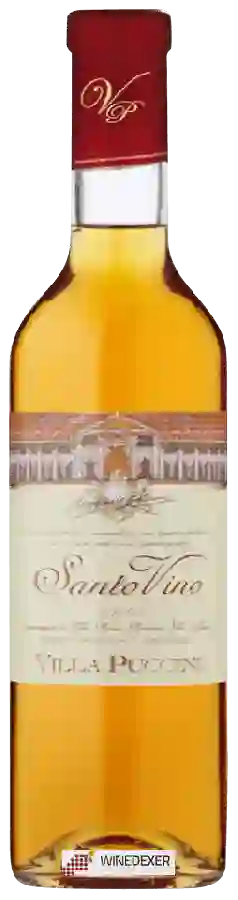
Winery Villa PucciniSanto Vino
 Sweet wine


This wine generally goes well with pork, beef or lamb.
Wine flavors and olphactive analysis




On the nose the Santo Vino of Winery Villa Puccini in the region of Tuscany often reveals types of flavors of non oak, earth or microbio and sometimes also flavors of vegetal, oak or tree fruit.
Food and wine pairings with Santo Vino
Pairings that work perfectly with Santo Vino



Original food and wine pairings with Santo Vino

The Santo Vino of Winery Villa Puccini matches generally quite well with dishes of beef, lamb or pork such as recipes of beef bourguignon in the oven of nanou, leg of lamb with herb stuffing or kale soup.
Details and technical informations about Winery Villa Puccini's Santo Vino.
Discover the grape variety: Malvoisie de Toscane
It was cultivated in ancient times and is believed to be of Greek origin. In Italy, associated with Trebbiano Toscano, it was used to produce the famous Chianti: these two white varieties are no longer part of the vineyard. In France, Tuscan Malvasia is practically unknown. It should be noted that many grape varieties have "malvasia" as a synonym, so confusion between them is always possible.
Last vintages of this wine
The best vintages of Santo Vino from Winery Villa Puccini are 2015, 2008, 0
Informations about the Winery Villa Puccini
The Winery Villa Puccini is one of of the world's great estates. It offers 35 wines for sale in the of Tuscany to come and discover on site or to buy online.

The wine region of Tuscany
Tuscany is one of the most famous and prolific wine regions in Europe. It is best known for its Dry red wines made from Sangiovese grapes, which dominate production. These include Chianti, Brunello di Montalcino and Vino Nobile di Montepulciano. The region's Vin Santo is also highly prized, as are its passito dessert wines, though these are produced in comparatively tiny quantities.
The word of the wine: Velouté
Said of a wine that is soft and caressing in the mouth.