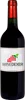
Vignobles Rambier AineChâteau Saint Jean d'Hiver Corbières
 Red wine


In the mouth this red wine is a powerful with a nice balance between acidity and tannins.
This wine generally goes well with beef, veal or pasta.
Taste structure of the Château Saint Jean d'Hiver Corbières from the Vignobles Rambier Aine
Light | Bold | |
Smooth | Tannic | |
Dry | Sweet | |
Soft | Acidic |
In the mouth the Château Saint Jean d'Hiver Corbières of Vignobles Rambier Aine in the region of Languedoc-Roussillon is a powerful with a nice balance between acidity and tannins.
Food and wine pairings with Château Saint Jean d'Hiver Corbières
Pairings that work perfectly with Château Saint Jean d'Hiver Corbières



Original food and wine pairings with Château Saint Jean d'Hiver Corbières
The Château Saint Jean d'Hiver Corbières of Vignobles Rambier Aine matches generally quite well with dishes of beef, pasta or veal such as recipes of melt-in-the-mouth pork tenderloin casserole, capellini with prosciutto or osso buco with mushrooms.
Details and technical informations about Vignobles Rambier Aine's Château Saint Jean d'Hiver Corbières.
Discover the grape variety: Putzcheere
It is believed to have originated in Hungary, in the region bordering Romania, from where it spread to Germany, Alsace and the southwest of France, particularly in the Gers and high Pyrenees departments. It is also found in the United States (California). Today, it is almost absent from French vineyards. - Synonyms: putchir, putscher, butschera (for all the synonyms of the grape varieties, click here!)
Informations about the Vignobles Rambier Aine
The Vignobles Rambier Aine is one of of the world's great estates. It offers 31 wines for sale in the of Corbières to come and discover on site or to buy online.

The wine region of Corbières
Corbières is an important appellation in the Languedoc-roussillon">Languedoc-Roussillon region of southern France. It is one of the best known and most productive appellations in the Languedoc. The Corbières vineyards produce large quantities of red and rosé wines, as well as a growing number of white wines. The reds are the strongest Part of the appellation; they are reputedly Rich and herbal, made from Grenache, Syrah, Mourvèdre, Lledoner Pelut and Carignan.
The wine region of Languedoc-Roussillon
Languedoc (formerly Coteaux du Languedoc) is a key appellation used in the Languedoc-Roussillon wine region of southern France. It covers Dry table wines of all three colors (red, white and rosé) from the entire region, but leaves Sweet and Sparkling wines to other more specialized appellations. About 75% of all Languedoc wines are red, with the remaining 25% split roughly down the middle between whites and rosés. The appellation covers most of the Languedoc region and almost a third of all the vineyards in France.
The word of the wine: Draft liquor (champagne)
After blending, the wine is bottled with a liqueur de tirage (a mixture of sugar and wine) and a yeast (selected yeasts). The yeast attacks the sugar and creates carbon dioxide. The fermentation, which lasts about two months, is prolonged by an ageing period (15 months minimum in total). The bottle is capped (some rare vintages are capped with a staple and a cork).