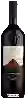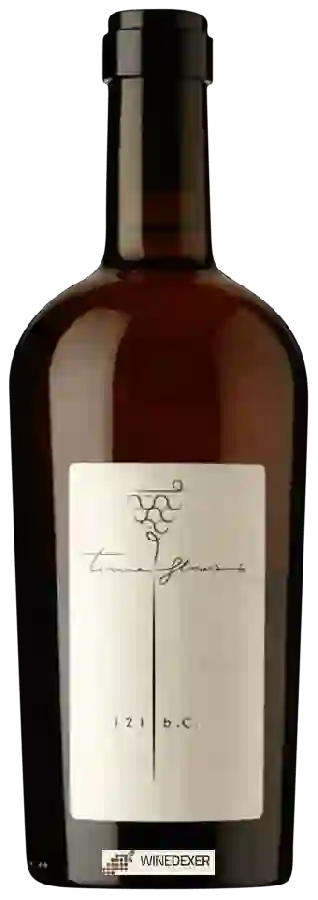
Winery Vignaioli Contrà SoardaTime Slow 121 b. c. Blanc
 White wine



In the mouth this white wine is a powerful with a nice freshness.
This wine generally goes well with lean fish, shellfish or mature and hard cheese.
Taste structure of the Time Slow 121 b. c. Blanc from the Winery Vignaioli Contrà Soarda
Light | Bold | |
Dry | Sweet | |
Soft | Acidic |
In the mouth the Time Slow 121 b. c. Blanc of Winery Vignaioli Contrà Soarda in the region of Veneto is a powerful with a nice freshness.
Wine flavors and olphactive analysis


On the nose the Time Slow 121 b. c. Blanc of Winery Vignaioli Contrà Soarda in the region of Veneto often reveals types of flavors of earth, tree fruit or citrus fruit.
Food and wine pairings with Time Slow 121 b. c. Blanc
Pairings that work perfectly with Time Slow 121 b. c. Blanc



Original food and wine pairings with Time Slow 121 b. c. Blanc


The Time Slow 121 b. c. Blanc of Winery Vignaioli Contrà Soarda matches generally quite well with dishes of pasta, shellfish or mature and hard cheese such as recipes of lasagna calabrese, seafood and mushroom quiche or melt-in-the-mouth omelette with tomatoes, asparagus and comté.
Details and technical informations about Winery Vignaioli Contrà Soarda's Time Slow 121 b. c. Blanc.
Discover the grape variety: Frontenac
A cross between Landot 4511 and Vitis Riparia 89 (very resistant to cold) obtained in 1978 at the University of Minnesota (United States) and propagated from 1996. It can also be found in Canada (Quebec, Ontario, etc.), in Lithuania, etc. In France, it is practically unknown. Note that the white and grey Frontenac are derived from mutations of the black, encountered and isolated in 2003 for the grey and in September 2005 for the white. - Synonymy: MN 1047 (for all the grape variety synonyms, click here!).
Last vintages of this wine
The best vintages of Time Slow 121 b. c. Blanc from Winery Vignaioli Contrà Soarda are 2012, 2015, 0, 2013 and 2014.
Informations about the Winery Vignaioli Contrà Soarda
The Winery Vignaioli Contrà Soarda is one of of the world's greatest estates. It offers 21 wines for sale in the of Veneto to come and discover on site or to buy online.

The wine region of Veneto
Veneto is an important and growing wine region in northeastern Italy. Veneto is administratively Part of the Triveneto area, aLong with its smaller neighbors, Trentino-Alto Adige and Friuli-Venezia Giulia. In terms of geography, culture and wine styles, it represents a transition from the Alpine and Germanic-Slavic end of Italy to the warmer, drier, more Roman lands to the South. Veneto is slightly smaller than the other major Italian wine regions - Piedmont, Tuscany, Lombardy, Puglia and Sicily - but it produces more wine than any of them.
The word of the wine: White Grenache
White grape variety cultivated mainly in Spain and a little in the south of France (southern Rhône valley, Languedoc-Roussillon). It is the white variety of Grenache noir. It is used in the blending of several white wines (dry wines or natural sweet wines) to which it gives richness, fatness and floral notes.