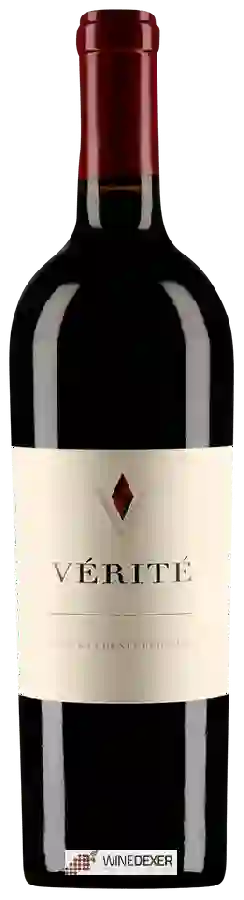
Winery VeriteRed
 Red wine


In the mouth this red wine is a powerful with a nice balance between acidity and tannins.
This wine generally goes well with poultry, beef or veal.

Taste structure of the Red from the Winery Verite
Light | Bold | |
Smooth | Tannic | |
Dry | Sweet | |
Soft | Acidic |
In the mouth the Red of Winery Verite in the region of California is a powerful with a nice balance between acidity and tannins.
Wine flavors and olphactive analysis



On the nose the Red of Winery Verite in the region of California often reveals types of flavors of non oak, earth or oak.
Food and wine pairings with Red
Pairings that work perfectly with Red



Original food and wine pairings with Red

The Red of Winery Verite matches generally quite well with dishes of beef, lamb or veal such as recipes of beer goulash, lamb tagine with prunes or sauté of veal with tomato.
Details and technical informations about Winery Verite's Red.
Discover the grape variety: Merseguera
Fresh and simple dry whites with a pale golden robe, a supple palate and preserved acidity, with signature aromas of citrus (lemon), white flowers, white-fleshed fruits (apple) and saline Mediterranean notes. A thirst-quenching Levantine profile to drink young. A traditional component of Levantine Spanish DOC whites (Valencia, Alicante) and the Castellón appellation, expressing regional identity. Native Spanish white grape of the Levant, productive and heat-resistant.
Last vintages of this wine
The best vintages of Red from Winery Verite are 2012, 2002, 1998, 0
Informations about the Winery Verite
The Winery Verite is one of of the world's greatest estates. It offers 4 wines for sale in the of California to come and discover on site or to buy online.

The wine region of California
Powerful, sunny reds: dense Napa Cabernet Sauvignon (blackcurrant, chocolate, tobacco, ample tannins), spicy, jammy Zinfandel from the Sierra Foothills, silky red-fruited Pinot Noir on the cool coast (Sonoma, Russian River, Central Coast). Opulent, buttery Chardonnay, notes of yellow fruit and vanilla. Varied climate, from the hot interior to the Pacific-cooled coast. 80% of US production, 139 AVAs including Napa (1st AVA, 1981).
The word of the wine: Sarment
Vine shoot of the year.





