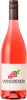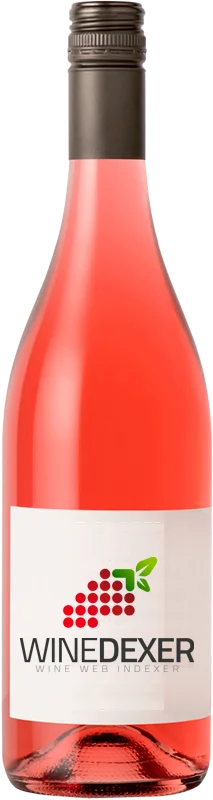
Cave du Vendômois50 Nuances Pineau d'Aunis Coteaux du Vendômois Rosé
 Pink wine
This wine generally goes well with
The 50 Nuances Pineau d'Aunis Coteaux du Vendômois Rosé of the Cave du Vendômois is in the top 30 of wines of Coteaux du Vendômois.
Details and technical informations about Cave du Vendômois's 50 Nuances Pineau d'Aunis Coteaux du Vendômois Rosé.
Discover the grape variety: Arrufiac
Arrufiac or Arrufiat is an old white grape variety that has existed since the 17th century and is part of the AOC Pacherenc de Vic-Bilh and Côtes-Saint-Mont in the South-West. It gives a wine rich in alcohol with a very characteristic nose. 100 hectares of Arrufiac are currently planted in France.
Informations about the Cave du Vendômois
The Cave du Vendômois is one of of the world's great estates. It offers 30 wines for sale in the of Coteaux du Vendômois to come and discover on site or to buy online.

The wine region of Coteaux du Vendômois
The Coteaux du Vendômois red is a Dry red wine. It falls into the category of still wine. It is produced in the Vineyard of the Loire, vineyard in the west of France and more precisely in the wine region of Touraine. Administratively, it can be produced in the department of Loir-et-Cher.
The wine region of Loire Valley
The Loire Valley is a key wine region in western France. It follows the course of the Loire River on its Long journey through the heart of France, from the inland hills of the Auvergne to the plains of the French Atlantic coast near Nantes (Muscadet country). Important in terms of quantity and quality, the region produces large quantities (about 4 million h/l each year) of everyday wines, as well as some of France's greatest wines. Diversity is another of the region's major assets; the styles of wine produced here range from the light, tangy Muscadet to the Sweet, honeyed Bonnezeaux, the Sparkling whites of Vouvray and the juicy, Tannic reds of Chinon and Saumur.
The word of the wine: Second fermentation
In the making of champagne, fermentation of the base wine to which is added the liqueur de tirage and which takes place in the bottle. This second fermentation produces the carbon dioxide, and therefore the bubbles that make up the effervescence of the wine.