The Winery Vallantica of Umbria

Winery Vallantica
The winery offers 11 different wines
3.7
Note - 1Note - 1Note - 1Note - 0.5Note - 0
Its wines get an average rating of 3.7.
It is ranked in the top 933 of the estates of Umbria.
It is located in Umbria
Find the Winery Vallantica on Facebook

The Winery Vallantica is one of the best wineries to follow in Ombrie.. It offers 11 wines for sale in of Umbria to come and discover on site or to buy online.

Top Winery Vallantica wines

Looking for the best Winery Vallantica wines in Umbria among all the wines in the region? Check out our tops of the best red, white or effervescent Winery Vallantica wines. Also find some food and wine pairings that may be suitable with the wines from this area. Learn more about the region and the Winery Vallantica wines with technical and enological descriptions.

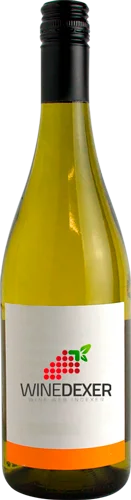
The top white wines of Winery Vallantica

Food and wine pairings with a white wine of Winery Vallantica

How Winery Vallantica wines pair with each other generally quite well with dishes of pasta, vegetarian or appetizers and snacks such as recipes of macaroni and cheese gratin, summer tuna quiche or samossa (india).

Organoleptic analysis of white wines of Winery Vallantica

In the mouth the white wine of Winery Vallantica. is a with a nice freshness.

The best vintages in the white wines of Winery Vallantica

  • 0With an average score of 3.40/5

The grape varieties most used in the white wines of Winery Vallantica.

  • Grechetto
  • Ciliegiolo

Discovering the wine region of Umbria

Umbria, in CentralItaly, is a region of lush hills, hilltop villages and iconic historic towns. The latter are exemplified by Orvieto and Assisi. At the very heart of the Italian peninsula, it is surrounded by Tuscany, Marche and Lazio. It is in fact the only Italian region without a coastline or international border.

Umbria, like Marche and Lazio, is best known for its white wine production. Despite changes in style over time, Orvieto DOC (based on the Trebbiano Grape) remains the region's most important appellation. It accounts for more than ten percent of Umbria's total wine production. Orvieto's styles can range from Dry (Secco) to semi-Sweet (Amabile) and sweet wines.

The top red wines of Winery Vallantica

Food and wine pairings with a red wine of Winery Vallantica

How Winery Vallantica wines pair with each other generally quite well with dishes of beef, pasta or veal such as recipes of beef in white wine, cannelloni with brocciu from jeanne or veal shank with mushrooms.

Organoleptic analysis of red wines of Winery Vallantica

In the mouth the red wine of Winery Vallantica. is a powerful with a nice balance between acidity and tannins.

The best vintages in the red wines of Winery Vallantica

  • 2011With an average score of 4.20/5
  • 0With an average score of 3.80/5
  • 2015With an average score of 3.80/5

The grape varieties most used in the red wines of Winery Vallantica.

  • Ciliegiolo
  • Merlot

Discover the grape variety: Grechetto

Discover other wineries and winemakers neighboring the Winery Vallantica

Planning a wine route in the of Umbria? Here are the wineries to visit and the winemakers to meet during your trip in search of wines similar to Winery Vallantica.

Discover the grape variety: Ciliegiolo

It is believed to be of Spanish origin. Today it is very present in Tuscany and in many other Italian regions where it is often blended with sangiovese to produce the famous Chianti. According to recent genetic analysis, it is the father of the said sangiovese, its mother being an almost unknown variety called calabrese di Montenuovo. - Synonymy: ciliegino, ciregiuolo or cireguoli, aleatico di spagna (for all the synonyms of the grape varieties, click here!). - Description: medium to large bunches, cylindrical-conical, winged, compact, strong medium-sized stalks with very little lignification; medium-sized, round berries, skin of medium thickness, very bluish-black with sometimes purplish reflections, juicy pulp. - Production potential: buds early in the year, only a few days after Chasselas. It is particularly fond of not too poor hillside soils. Vigorous, productive and regular, it should however be pruned in relation to the fact that its base eyes are not very fertile. Sensitive to wind, mildew, powdery mildew, acid rot and grey rot. Resistant to drought. Ripening 2nd period late. - Wine type/flavours: gives a full and supple wine with soft tannins, rich in alcohol, of a more or less dark ruby colour with in some cases purplish tints. Aromas of cinnamon, cherry, blueberry, spicy notes, plum, fresh grapes, liquorice, tobacco, vanilla, ... .