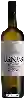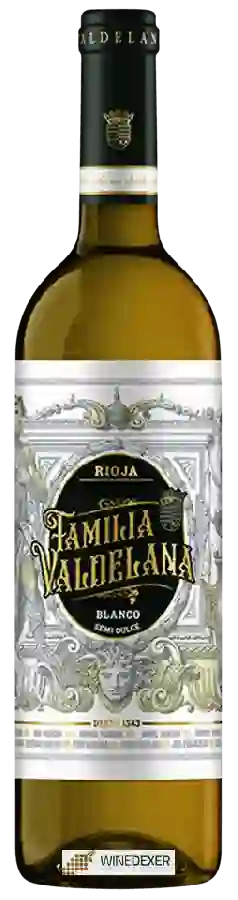
Winery ValdelanaBlanco Semidulce
 White wine
In the mouth this white wine is a powerful.
This wine generally goes well with appetizers and snacks, lean fish or shellfish.

Taste structure of the Blanco Semidulce from the Winery Valdelana
Light | Bold | |
Dry | Sweet | |
Soft | Acidic |
In the mouth the Blanco Semidulce of Winery Valdelana in the region of Rioja is a powerful.
Food and wine pairings with Blanco Semidulce
Pairings that work perfectly with Blanco Semidulce



Original food and wine pairings with Blanco Semidulce

The Blanco Semidulce of Winery Valdelana matches generally quite well with dishes of shellfish, appetizers and snacks or lean fish such as recipes of bouillabaisse like in marseille, bread with cheese and bacon or fish soup from marseille by lucette.
Details and technical informations about Winery Valdelana's Blanco Semidulce.
Discover the grape variety: Trebbiano
Fresh, thirst-quenching dry whites with a pale robe, a supple palate and preserved acidity of simple citrus (lemon), green apple, white flowers and neutral notes. A light profile to drink young. A family with several varieties (Toscano, Romagnolo, d'Abruzzo, Giallo), pillar of everyday Italian whites (Orvieto DOC, Frascati DOC, Trebbiano d'Abruzzo DOC). Exported to France as ugni blanc for Cognac and Armagnac distillation.
Informations about the Winery Valdelana
The Winery Valdelana is one of of the world's great estates. It offers 51 wines for sale in the of Rioja to come and discover on site or to buy online.

The wine region of Rioja
Star of great Spanish reds: signature Tempranillo, elegant and complex, with notes of ripe cherry, plum, leather, vanilla and tobacco from American oak ageing. Classification by age: fruity Joven, balanced Crianza, ample Reserva, deep, silky Gran Reserva (5 years, 2 in barrel). Some fresh Viura whites and generous rosés. Spain's first DOCa (1991), 3 sub-zones (Alta, Alavesa, Oriental), 93.
The word of the wine: Destemming
Action consisting in separating the grapes from the stalk before vinification. The stalk, the woody part of the bunch, may give the wine an unpleasant vegetal character.